Blog
Noira Cane Arm Chair A Design Classic Built for Restaurant and Hotel Dining Rooms

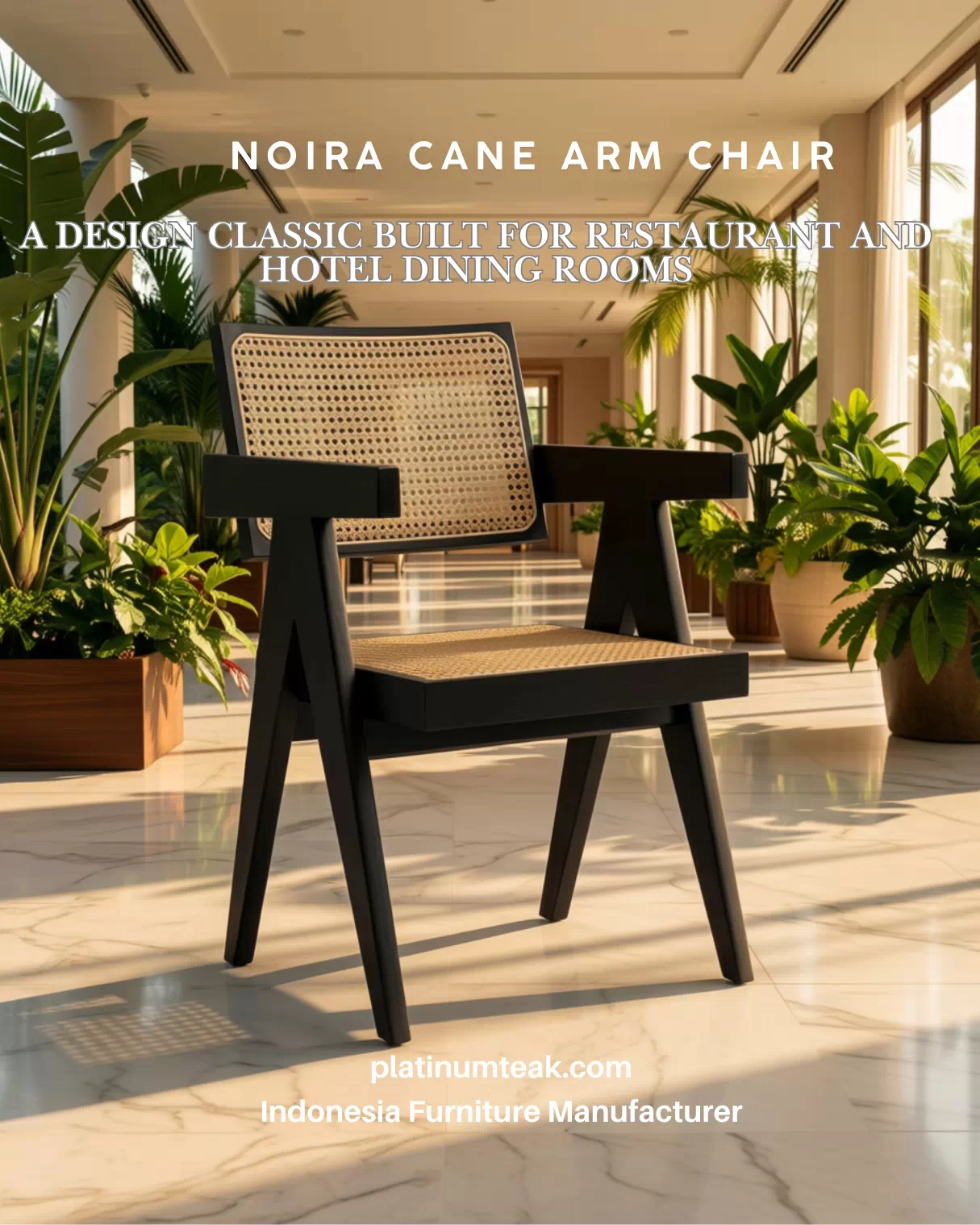
Noira Cane Arm Chair A Design Classic Built for Restaurant and Hotel Dining Rooms
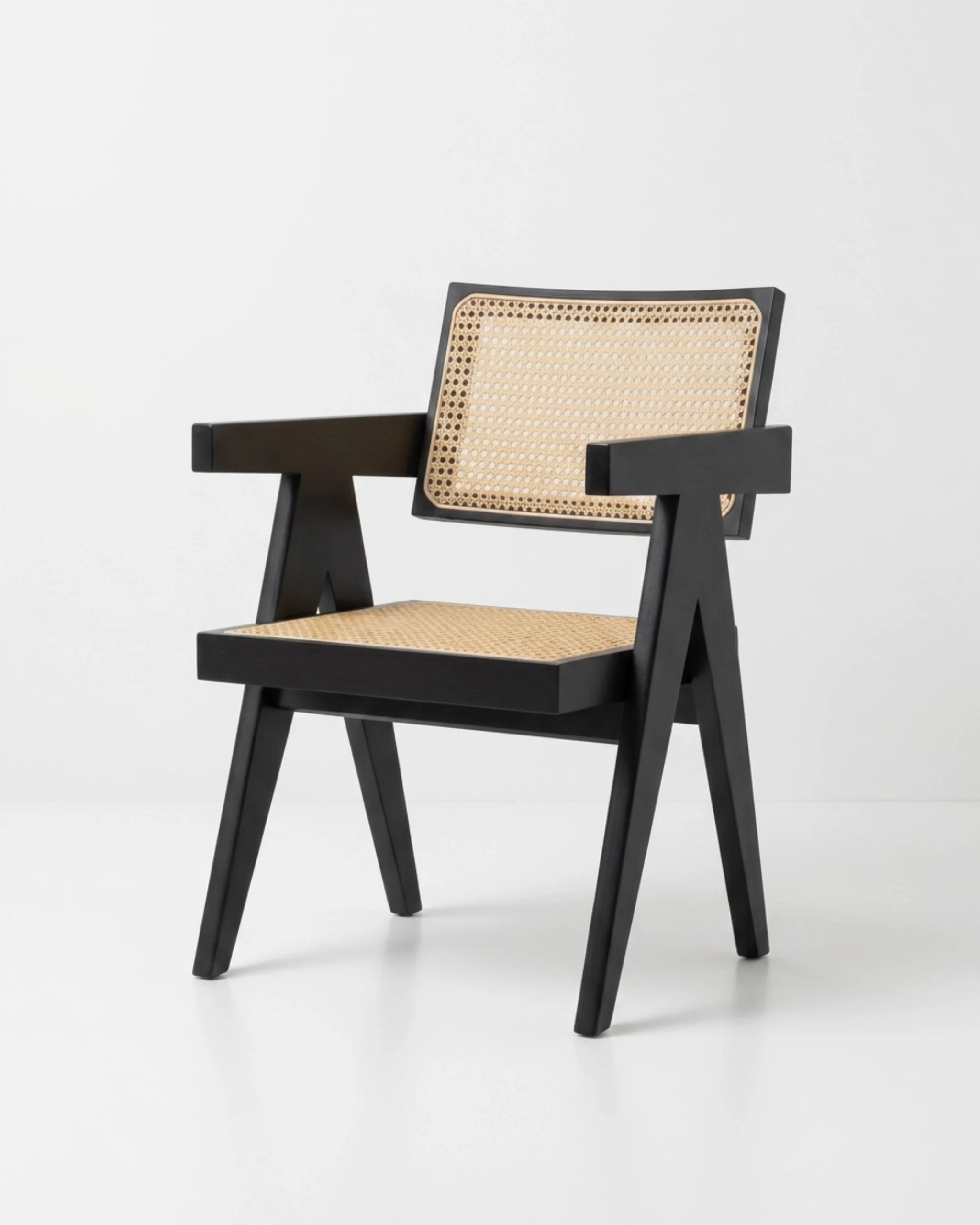
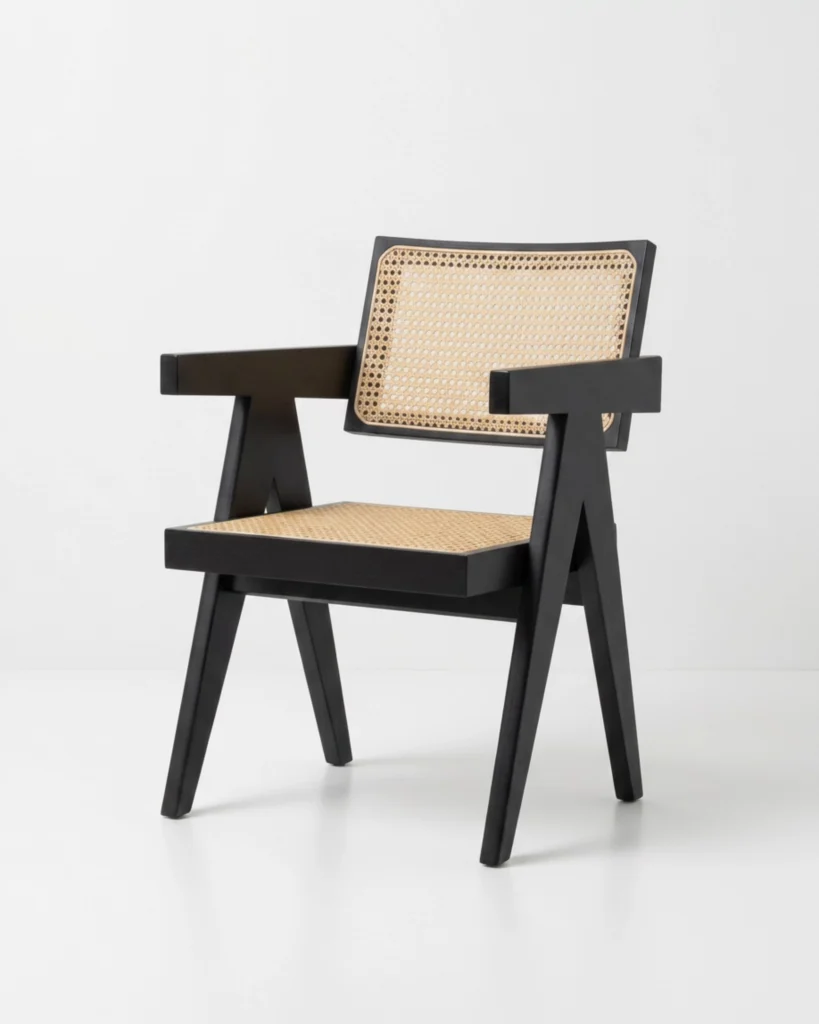
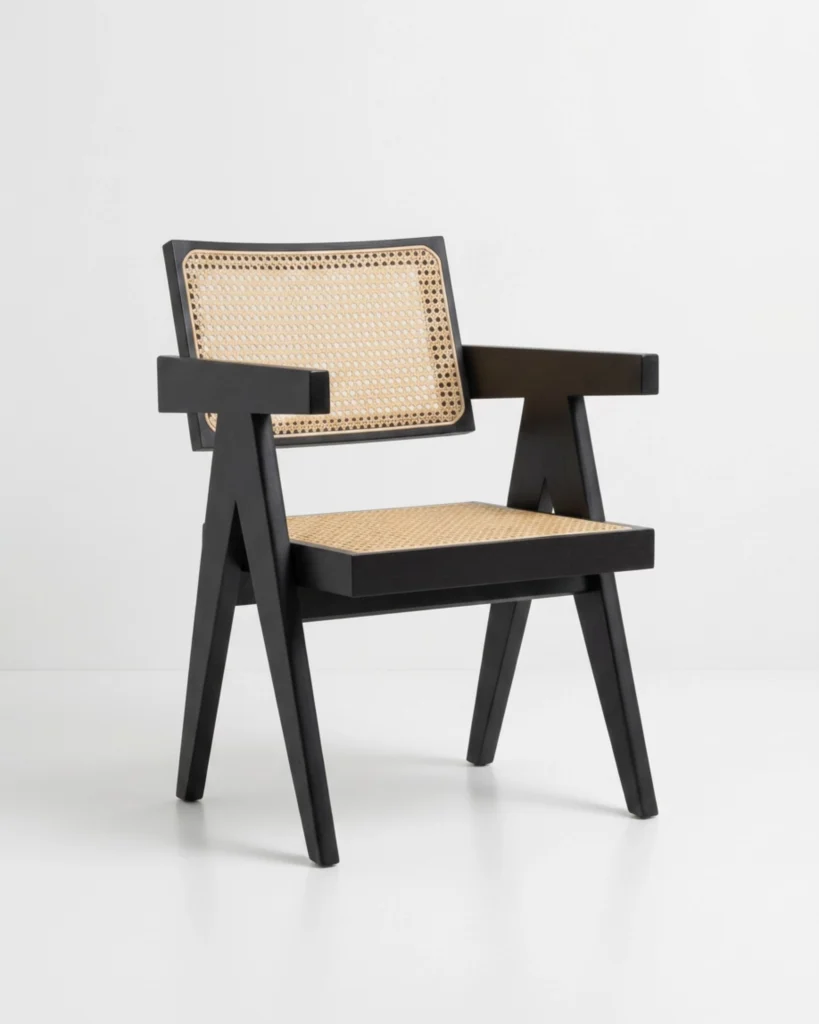
Noira Cane Arm Chair Every few years, a chair design comes back into fashion, and hospitality buyers scramble to find a version that’s actually built to last rather than just styled to look right in a photo. Cane armchairs are having that moment right now. Walk into any newly opened boutique restaurant or hotel dining room, and there’s a good chance you’ll spot the same silhouette: a black angled frame, a woven cane back, an A-frame leg that looks almost architectural .
The problem is that a lot of what’s being sold under that description is thin, mass-produced, and not meant to survive a busy dining room. That’s the gap the Noira Cane Arm Chair is built to close. At Platinum Teak Indonesia furniture manufacturer, we get asked constantly whether the cane trend can actually hold up under commercial use, so let’s go through what’s behind this design and where it fits inside our full teak chair collection.
Why This Design Keeps Showing Up on Hospitality Mood Boards
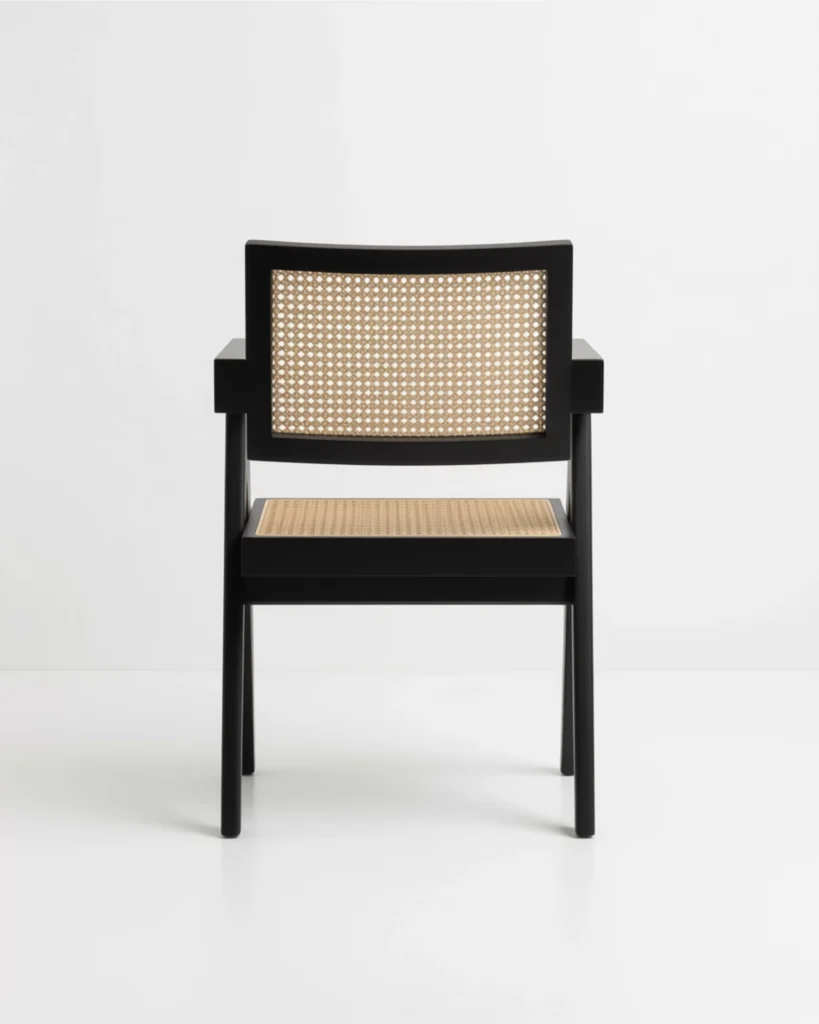
The Noira’s silhouette traces back to a mid-century design language that’s become shorthand for considered, design-forward hospitality spaces. The angled T-shaped arms and A-frame legs aren’t just decorative choices, they’re structural ones borrowed from furniture that was built to be functional first and stylish as a byproduct.
What makes this particular shape so durable in trend cycles is that it doesn’t lean on upholstery or color to make its statement. The frame does the work. A black-stained solid wood frame against natural woven cane reads as intentional in almost any interior style, from a minimalist café to a warmly lit dinner spot with heavy wood tones elsewhere in the room.
For procurement teams, that versatility matters. A chair that photographs well in more than one interior style is a chair you can reuse across multiple properties or redesign cycles without starting the sourcing process over from scratch.
What’s Actually in the Build
Here’s where I’ll skip the styling language and get into what actually determines whether this chair survives a commercial dining room.
Solid Wood Frame, Not Painted Composite
The frame is built from solid wood with a black-stained finish, not a painted composite or veneer wrapped around particleboard. That distinction matters more than it sounds. Painted composite chips and shows wear within months in a high-traffic dining room. A solid, stained wood frame ages evenly, and minor scuffs are far less noticeable against a matte black finish than they would be on a glossy painted surface.
The angled leg construction follows the same joinery logic used across our outdoor furniture range, built to handle repeated weight shifts without the joints loosening. A dining chair gets pulled out, sat in, and pushed back in dozens of times a day. That repeated stress is exactly what well-cut joinery is designed to absorb.
Hand-Woven Cane, Not a Printed Pattern
The backrest and seat use genuine hand-woven natural cane, not a printed or molded imitation. This is the detail that separates a design piece from something that only looks like one in photos. Natural cane has texture and slight variation from panel to panel, which is part of what makes the finished chair feel handcrafted rather than mass-stamped.
It’s worth being upfront about what this means for care. Cane weave is an indoor material. It holds up beautifully in covered dining rooms, lobbies, and lounges, but it isn’t intended for direct outdoor exposure the way a fully teak piece would be. If a space needs both indoor cane seating and outdoor teak seating, we can usually source both from the same production run to keep the material story and finish consistent across a property.
Armrests Built for All-Day Seating
The T-shaped arms aren’t purely visual. They give the chair a wider stance at elbow height, which makes a real difference for guests seated through a long dinner or a lengthy meeting in a hotel lounge. Armchairs without that structural width often feel narrow after twenty minutes, even if they look identical from a distance.
Where Noira Fits Best
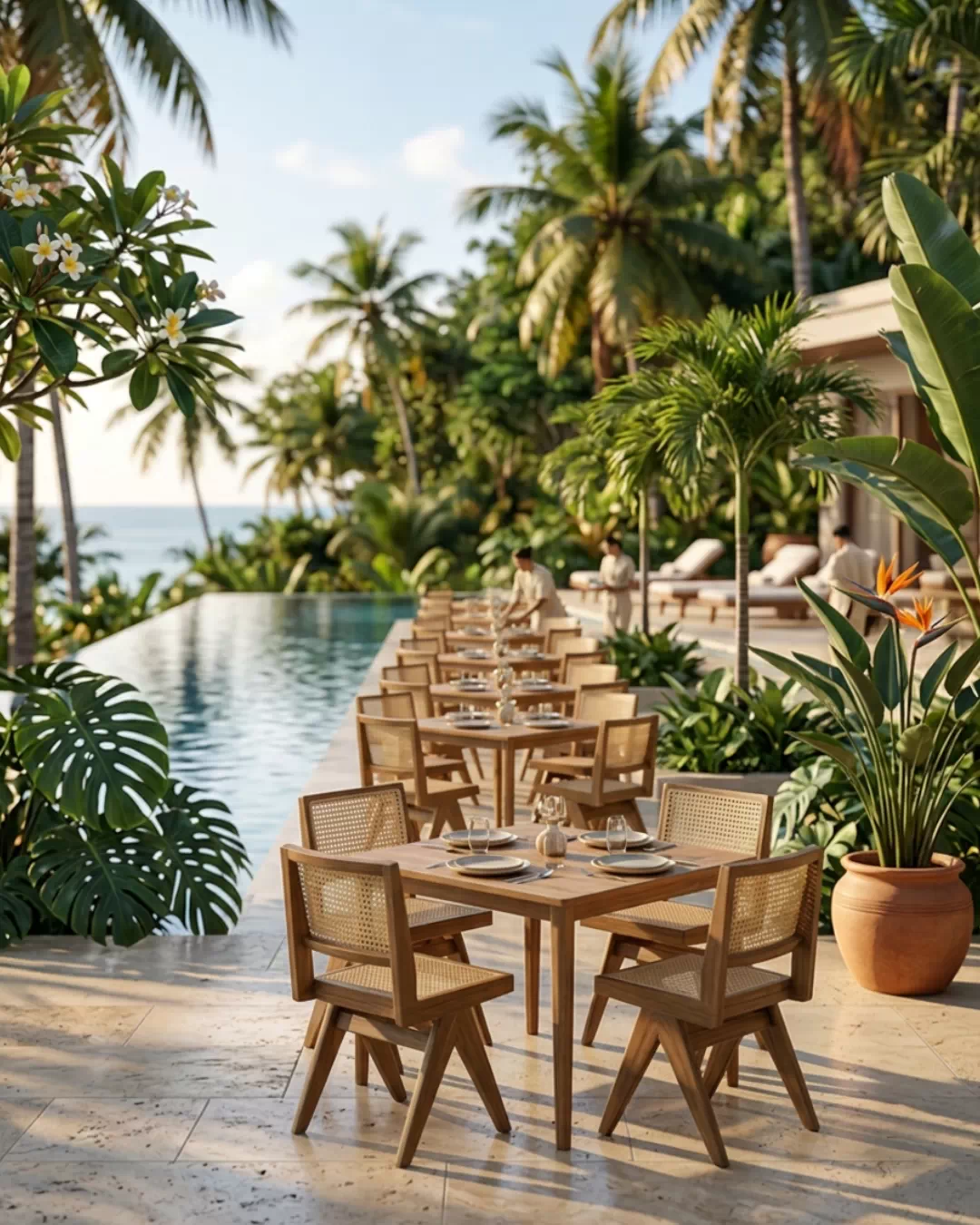
Restaurant dining rooms are the most natural fit, particularly for concepts built around a warm, considered atmosphere rather than a purely modern or industrial look. Boutique hotel lobbies and breakfast rooms are another strong match, especially where the furniture needs to hold its own as a design element rather than fade into the background.
We’ve also seen demand from private members’ clubs and co-working spaces looking to move away from generic conference seating. A cane armchair signals a different kind of space than a standard mesh office chair, even when it’s doing the same job.
The Craft Behind the Weave
Cane weaving is a skill that takes years to develop properly, and it shows in the finished product. A rushed or poorly tensioned weave sags within months and becomes difficult to repair cleanly. A properly woven cane panel, done by an experienced craftsperson, holds its tension for years and can be rewoven when it eventually does wear, rather than requiring the whole chair to be replaced.
Noira’s cane panels are woven by hand in Jepara, in the same workshops responsible for the joinery on our solid teak pieces. That’s not a small detail for a hospitality buyer thinking long-term. A chair that can be re-caned rather than discarded is a very different cost proposition over a ten-year property lifecycle than one that gets replaced wholesale every few years.
Sourcing This at Volume
If you’re moving from a single sample chair to a full dining room or property order, a few things are worth locking down early. Ask about consistency in frame color and cane tone across production batches, since natural cane does carry some variation and larger orders often span multiple runs. Ask about lead times specific to your order size, since cane weaving takes longer per unit than upholstered seating. And if the piece needs your own branding or a custom finish, we handle white label furniture production from finish to packaging.
It’s also worth asking about maintenance guidance upfront, especially for properties without in-house furniture experience. Cane doesn’t need much beyond occasional dusting and keeping it out of direct, prolonged moisture, but it’s worth having that conversation with your supplier before, not after, a spill happens in a busy dining room.
Before committing to a full rollout, order a single sample chair. A short sit test and a close look at the weave tension will tell you more than any spec sheet, and it’s a minor cost against a multi-unit dining room order.
Comparing Noira to Typical Cane Chair Alternatives
Most cane chairs sold at commercial scale fall into one of two categories, and neither holds up especially well. The first is the fully mass-produced version, where the cane is replaced with a printed vinyl pattern stretched over a frame. It looks convincing in a listing photo and starts looking cheap within a single dining season, especially once it picks up scratches that reveal the material underneath isn’t cane at all.
The second is a genuine cane chair built on a lightweight frame to cut production costs, which tends to develop wobble in the joints far earlier than a solid wood piece would. Neither of these issues shows up on a spec sheet unless you know to ask about frame density and joinery method specifically. It’s a useful habit to request close-up photos or a sample from any cane furniture supplier before committing to volume, regardless of who you end up ordering from.
Common Questions From Procurement Teams
Is the cane weave durable enough for daily restaurant use? Yes, when it’s genuinely hand-woven and properly tensioned, which is why we’d encourage any buyer to inspect a sample closely rather than relying on photos alone. Can the frame color be changed from black? We can produce Noira in other stains and finishes for large enough orders, though the black finish is what most hospitality clients request specifically for its versatility across interior styles.
Does this chair work outdoors? Not recommended for uncovered outdoor use, given the natural cane material. For matching outdoor seating, we’d typically pair it with a solid teak piece from the same collection so the material language stays consistent across indoor and outdoor areas of the same property.
Furnishing a Dining Space That Needs to Last?
A dining chair gets more daily use than almost any other piece of furniture in a hospitality space, and it shows the wear faster too. The Noira Cane Arm Chair is built to hold up to that use while keeping the design detail that made buyers want it in the first place.
Browse the rest of our product catalog, check common wholesale questions on our FAQ page, or get in touch with our team for a sample unit and volume quote.