

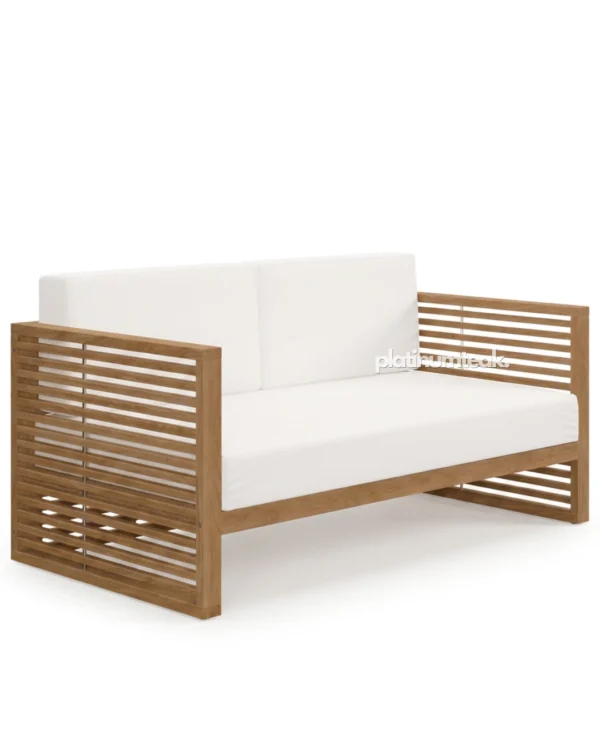
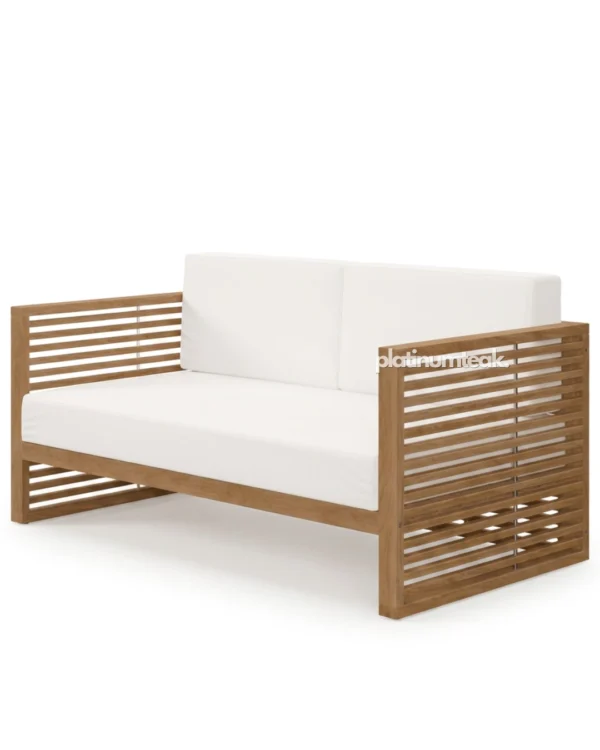
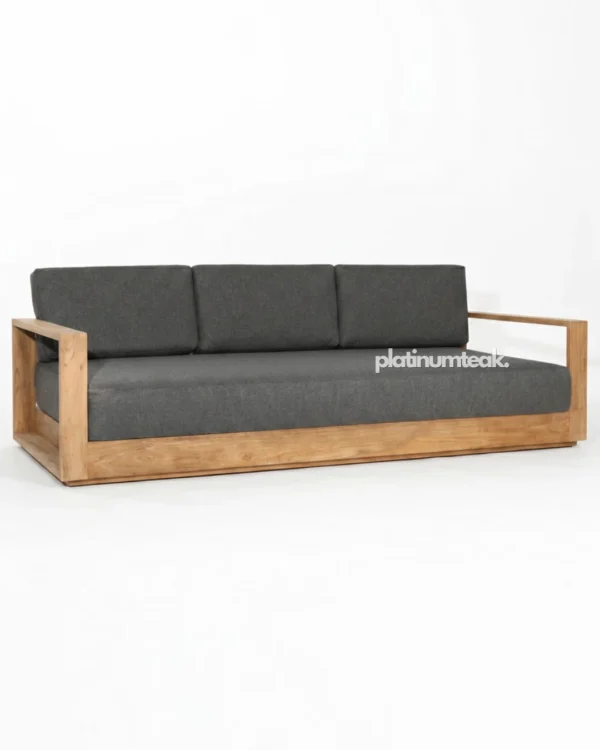
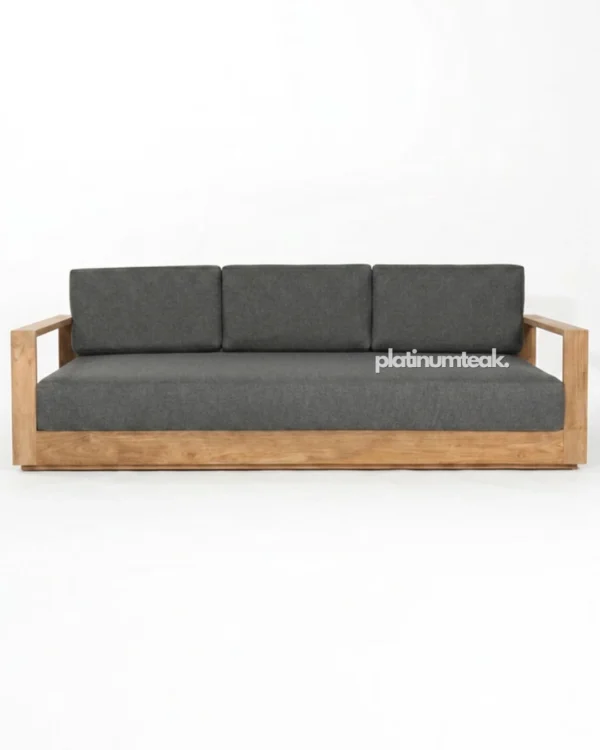
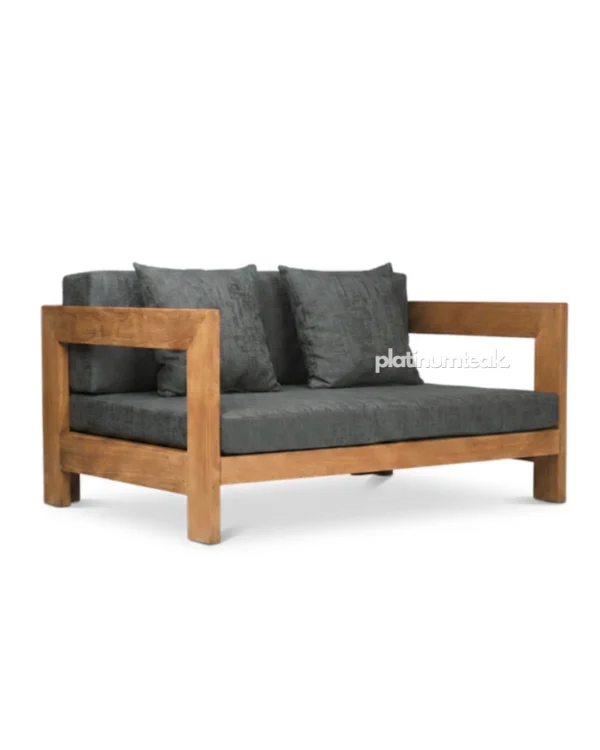
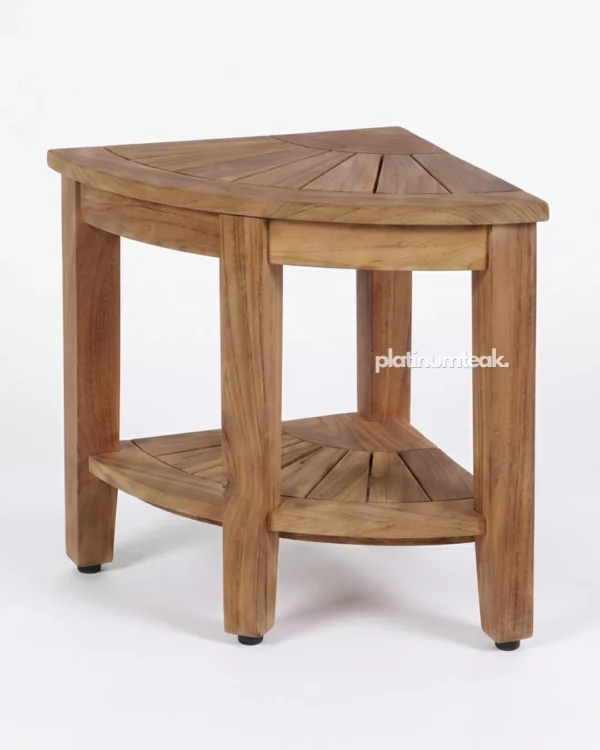
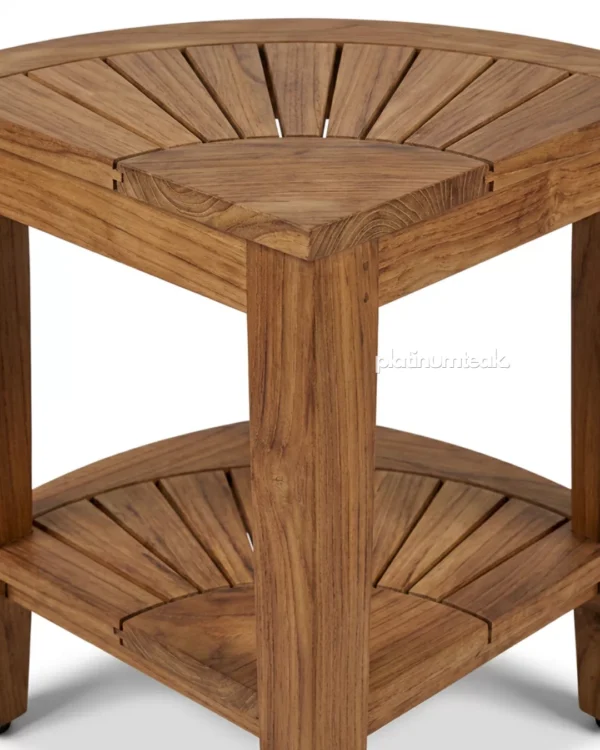
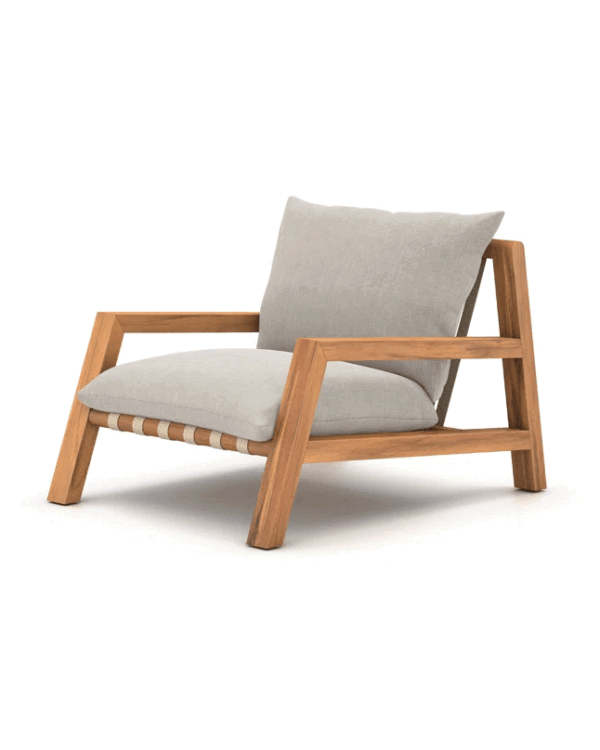
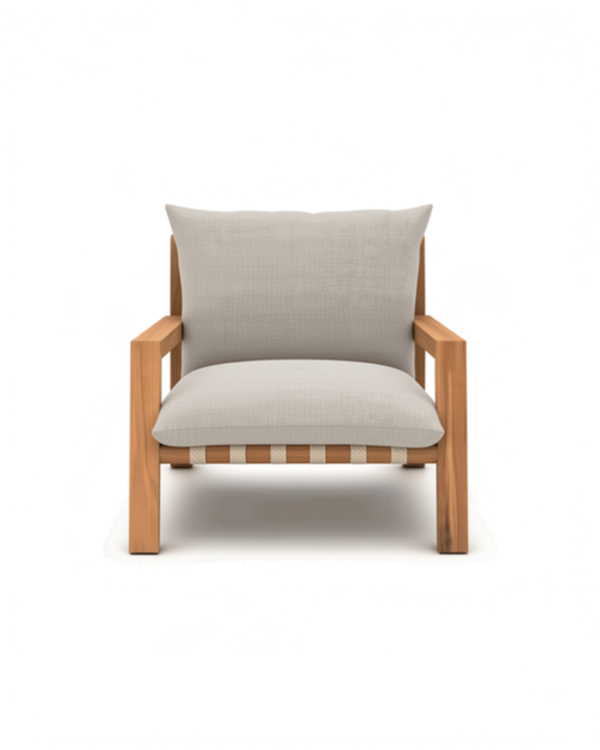
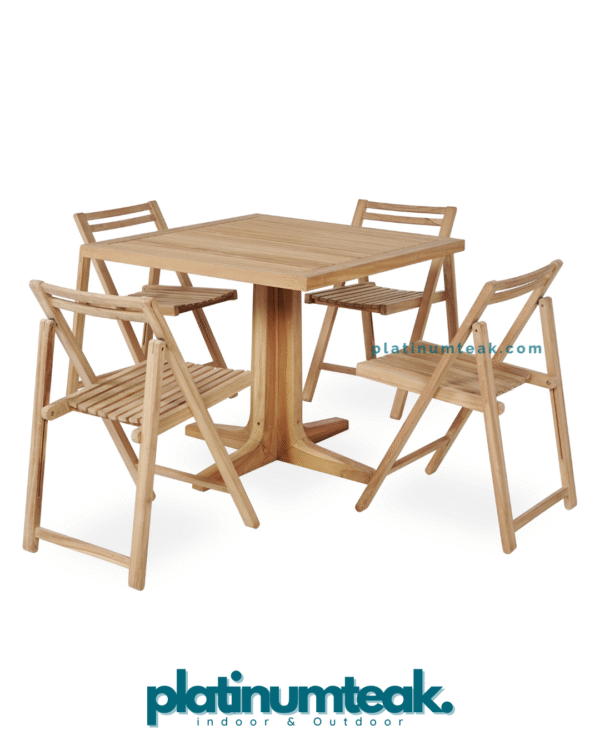
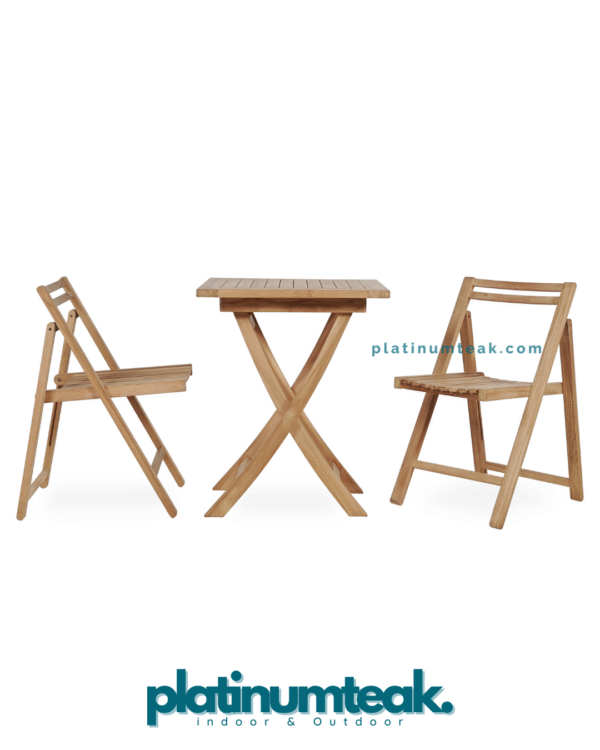
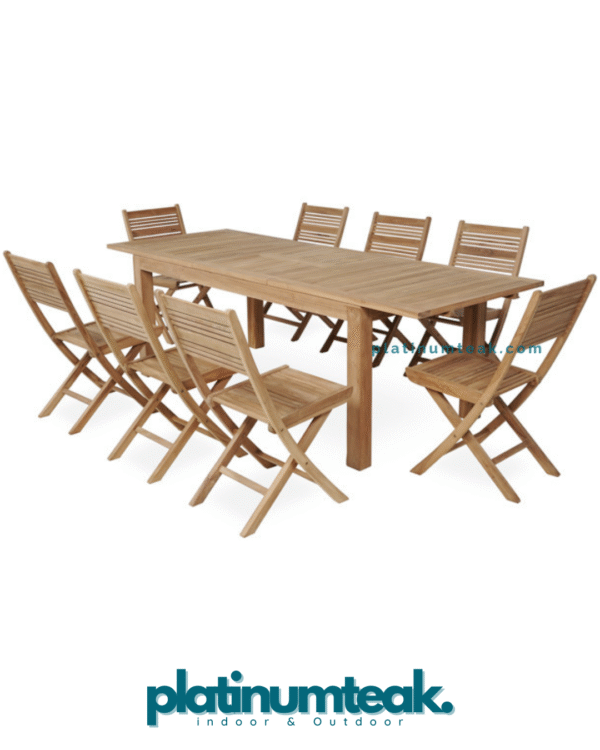
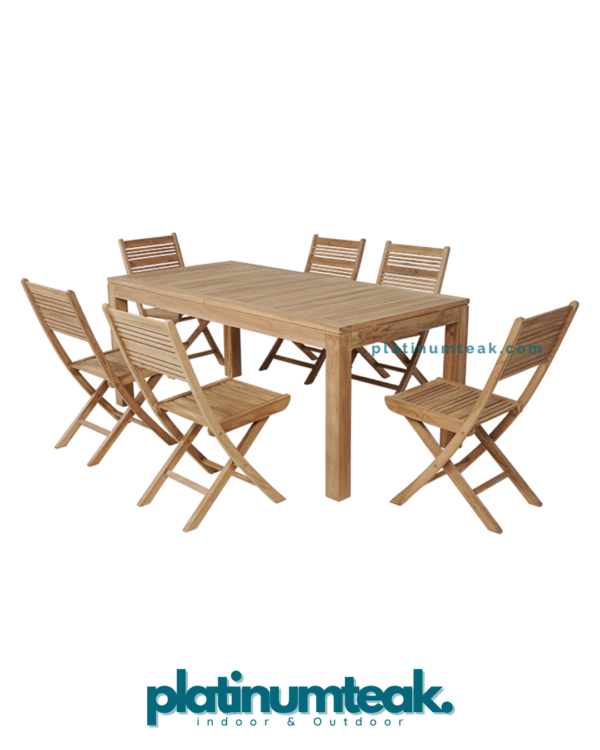
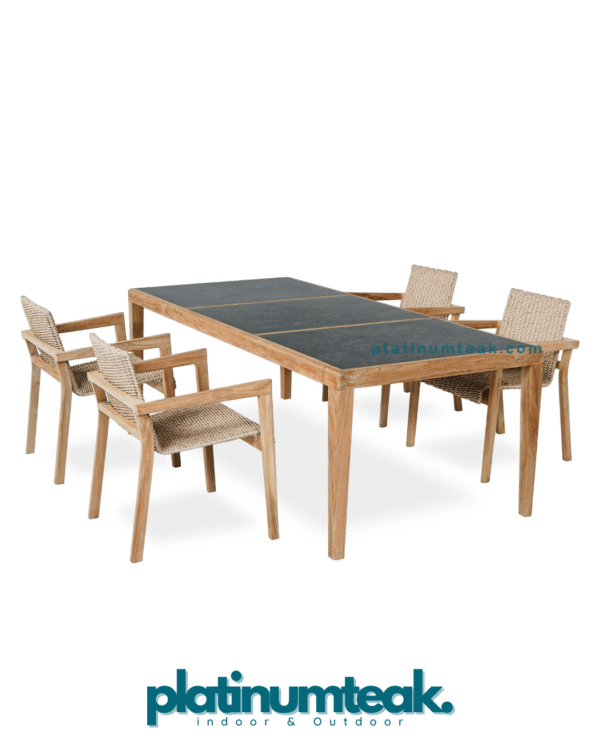
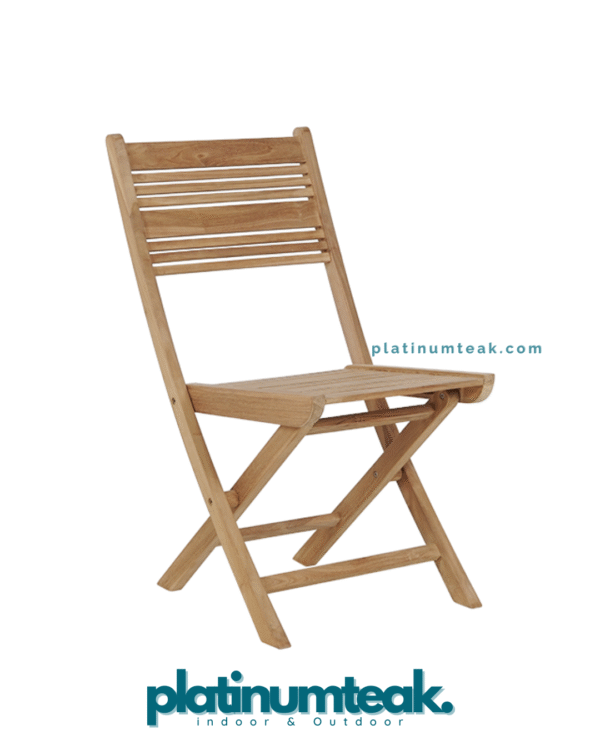
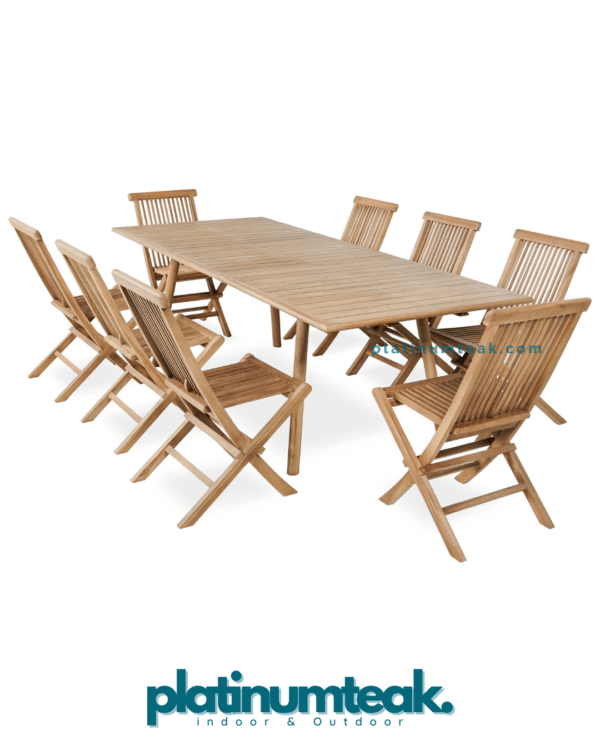
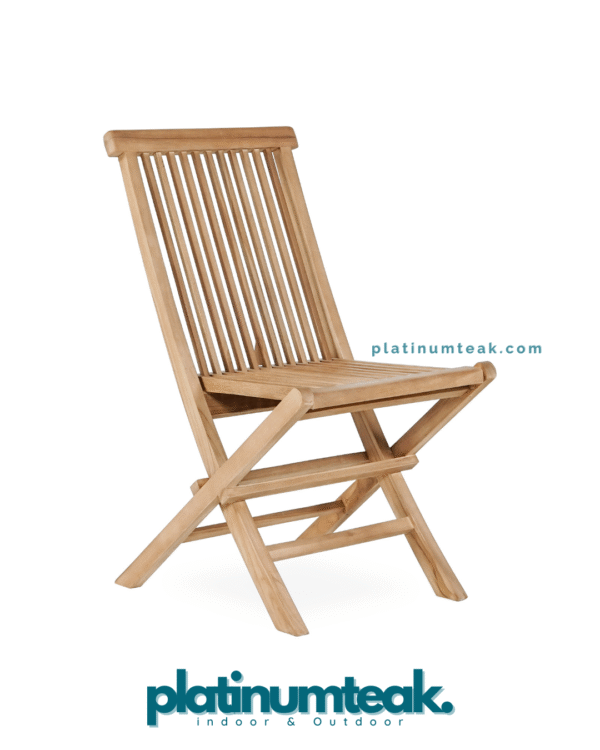
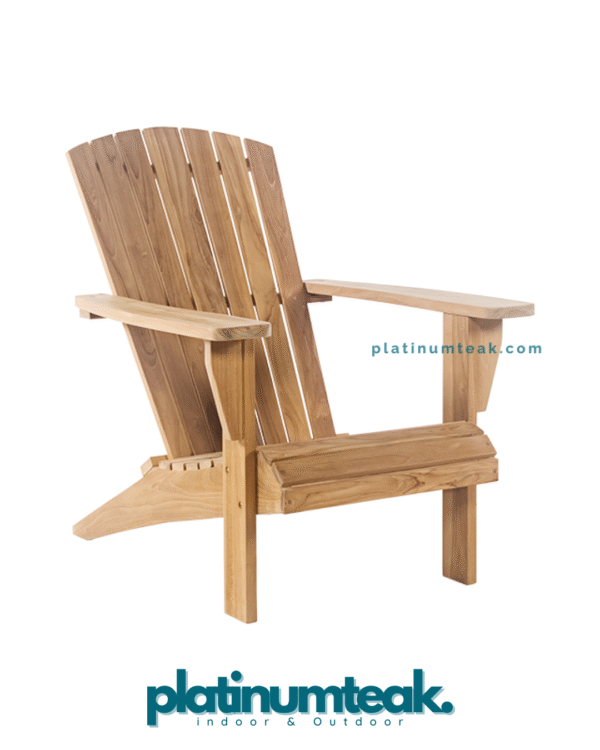
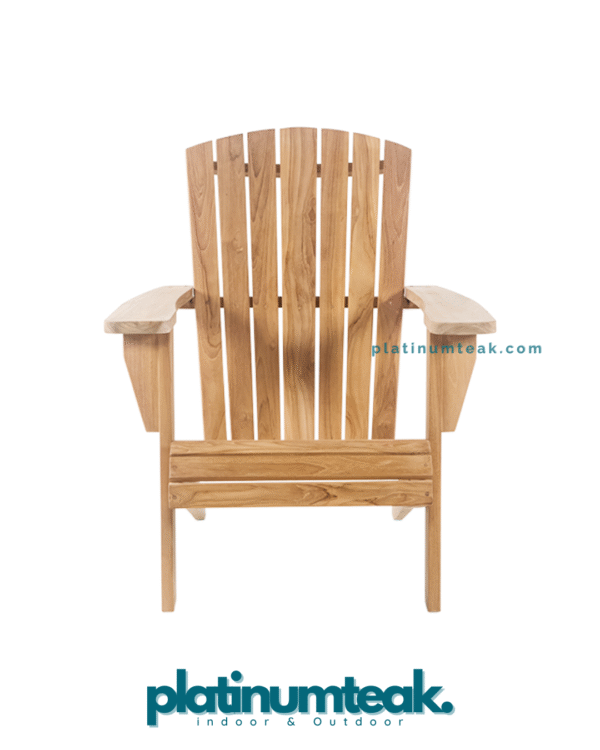
Outdoor teak furniture built for properties where the furniture stays outside year round, pool decks, resort terraces, restaurant courtyards, and villa gardens. Every frame in this collection uses mortise-and-tenon joinery with no hidden metal fasteners, and pieces combining teak with woven cane or rope use outdoor-rated fiber rather than indoor-grade material borrowed across product lines. Available at single-container and multi-container volumes for hospitality projects.
Why teak became the outdoor standard
Teak was the default material for outdoor furniture long before synthetic alternatives existed, and the reason is chemical rather than aesthetic. The wood carries natural oils and silica that resist moisture, insects, and fungal decay without any sealant layer applied on top. Other hardwoods need treatment to approach that resistance, and even treated they rarely match teak across a decade of exposure. That's the practical argument. The aesthetic one is separate: teak looks better as it ages, which is unusual for outdoor materials.
What actually fails on outdoor furniture
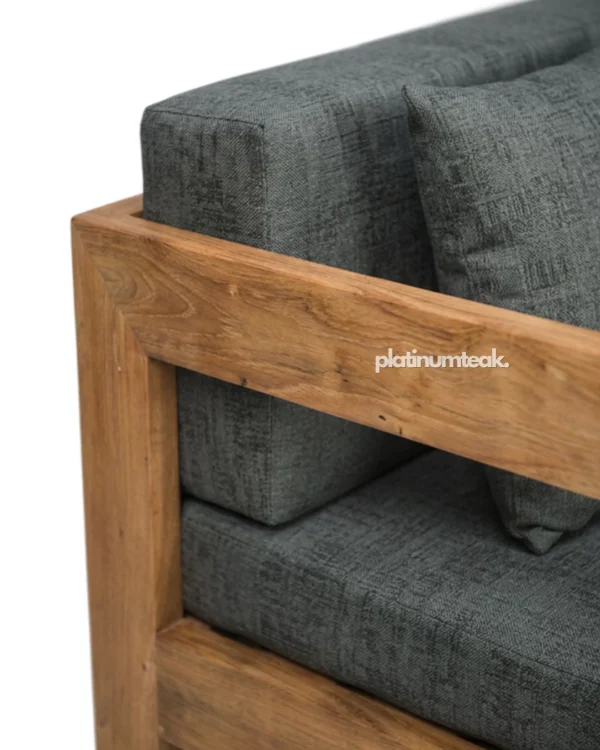
Buyers evaluating outdoor teak furniture tend to focus on wood quality first and joinery second, which is backwards. High-quality teak assembled with metal brackets or heavy glue will still fail at the connection points before the wood itself gives out. Screws work loose under the weight-shifting that seating furniture takes daily, and glue joints degrade through the humidity cycling between a covered terrace and open sun.
The second common failure is hardware. Any metal fastener sitting inside a frame will eventually rust in coastal air, and rust expands, which splits the wood around it from the inside. Furniture built without concealed metal simply doesn't have this failure mode.
Weathering, and the choice you have to make
Left untreated, outdoor teak weathers to a silvery grey within roughly six to twelve months depending on sun exposure. Many hospitality designers prefer this, since it ages evenly across a whole terrace and requires no maintenance at all. The alternative is a teak oil finish that holds the warmer honey tone, but it needs reapplying every six to twelve months. Neither option is better in the abstract, it depends entirely on whether the property has maintenance staff with time for it. Properties without that capacity are usually happier letting the wood grey out.
Cane and rope in outdoor settings
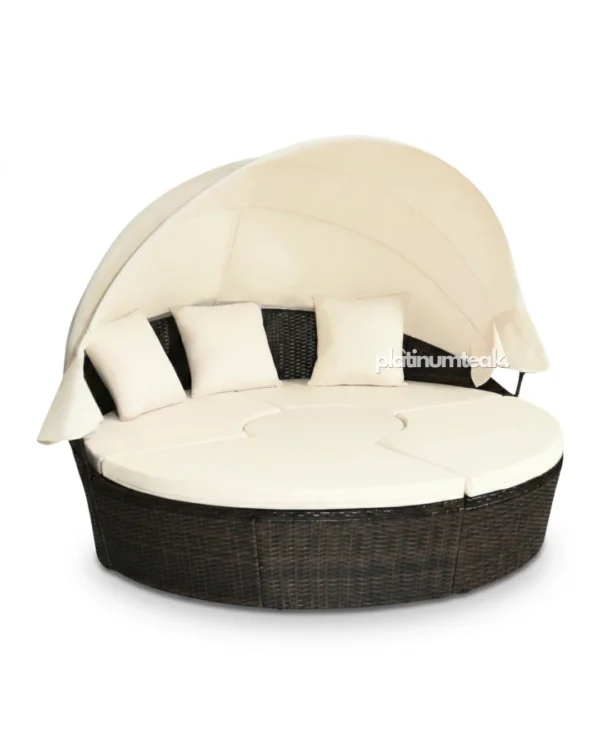
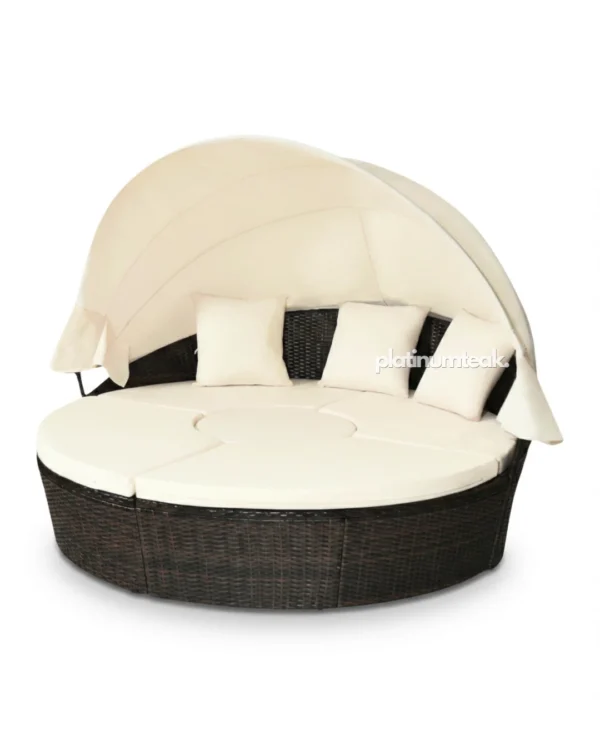
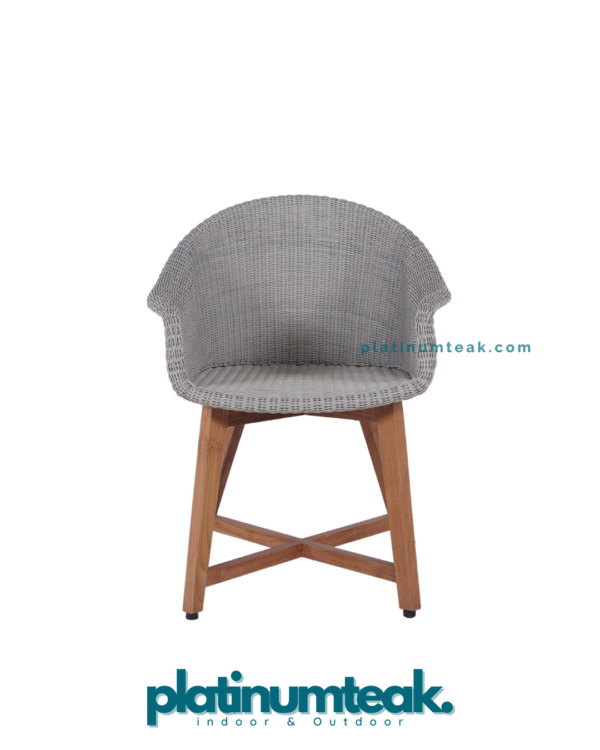
Not every outdoor piece is solid wood. Cane and rope accents introduce a second craft alongside the joinery, and they weather differently. Natural cane does better in covered or partially shaded positions, while synthetic rope holds up to constant direct UV without becoming brittle. A property mixing both, cane in the shaded lounge and rope on the open pool deck, generally gets better long-term results than forcing one material across every zone.
Ordering for a project
Hospitality buyers ordering in volume should plan around three things. First, batch consistency, wood from different batches months apart will not match, so a forty-piece terrace order should come from one production run. Second, lead time, ocean freight sits on top of production time rather than running in parallel. Third, packing format, knock-down packing lowers freight cost significantly on larger orders but adds assembly time on site.
We can confirm crate dimensions, batch tracking, and staged production timelines before an order is committed. For quantities and lead times, contact info@platinumteak.com.
Common questions
Does outdoor teak furniture need covering overnight? No. Covering is only useful if a piece will sit unused for extended periods, and even then the cover should be breathable, since trapped moisture causes more problems than rain does.
Can weathered grey teak be restored to its original tone? Yes. Light sanding followed by teak oil brings back the warm colour, though the piece will grey again unless the oil is maintained.