Blog
Indonesia Furniture Manufacturer The Complete Guide to Sourcing Solid Teak Furniture from Jepara

Searching for an Indonesia furniture manufacturer usually starts the same way for most buyers: a stack of catalog PDFs, a handful of Instagram accounts that all look similar, and no clear way to tell which supplier is actually a manufacturer and which is a trading company reselling someone else’s production. That distinction matters more than most first-time buyers realize, and it’s the first thing worth understanding before placing any order.
This guide walks through what actually separates a real Indonesian furniture manufacturer from a middleman, why Jepara specifically became the center of the country’s teak furniture industry, and how our own catalog at Platinum Teak Indonesia furniture manufacture is organized across outdoor, indoor, and custom production categories.
Why Indonesia, and Why Jepara Specifically
Indonesia has been a global source for teak furniture for decades, and the reason isn’t just favorable labor costs, it’s that the country has both the raw material and generations of accumulated craftsmanship in one place. Java has long-managed teak plantations that supply consistent, legally sourced wood, and coastal towns across Central Java developed furniture-making industries around that supply.
Jepara, on the northern coast of Central Java, is the most concentrated example. Furniture production there isn’t a recent development built around export demand, it’s a regional trade passed down through families and workshops for generations. That history is part of why buyers researching an Indonesia furniture manufacturer keep landing on Jepara specifically, rather than furniture hubs in other parts of the country.
For a wholesale buyer, this matters practically. A region with decades of accumulated craft knowledge tends to produce more consistent joinery, more reliable finishing, and workshops that can actually execute custom designs rather than just copying a reference photo.
Manufacturer vs. Trading Company: A Distinction Worth Understanding
Not every supplier calling itself an Indonesia furniture manufacturer actually operates a production facility. Some are trading companies that source finished goods from multiple small workshops, add a margin, and sell under their own brand. That’s not necessarily dishonest, but it does mean less control over quality consistency, longer communication chains when something needs to be adjusted, and less transparency into how the furniture is actually built.
A genuine manufacturer controls production directly, from raw wood selection through joinery, finishing, and packing. That direct control is what allows for realistic lead time commitments, consistent wood grain and color across a large order, and the ability to accommodate custom specifications rather than just choosing from a fixed catalog. When evaluating any Indonesia furniture manufacturer, it’s worth asking directly whether they operate their own workshop or whether they’re subcontracting production, since the answer affects everything downstream in the ordering process.
What Makes Teak the Material of Choice
Teak’s reputation in outdoor and commercial furniture isn’t marketing, it comes from the wood’s natural oil content, which resists moisture, insects, and decay without needing a synthetic sealant. Left untreated, teak weathers to a silver-grey patina rather than rotting or cracking, and it can be periodically oiled to maintain its original honey-brown tone if a property prefers that look.
Responsible manufacturers source teak from managed plantations, often under Indonesia’s SVLK legality verification system, which certifies that timber comes from legal, traceable sources rather than unregulated logging. For buyers sourcing at volume, particularly for markets with import regulations around timber legality, this certification isn’t a marketing detail, it’s a requirement worth confirming before placing a large order.
The Craftsmanship Behind the Joinery
Solid teak furniture is only as good as the joinery holding it together. Traditional mortise and tenon construction, where one piece of wood is shaped to fit precisely into a corresponding slot in another, remains the standard for furniture built to survive years of outdoor exposure and daily commercial use. Unlike screws or metal brackets, these joints don’t corrode, and properly cut joints tend to tighten as the wood settles rather than loosening over time.
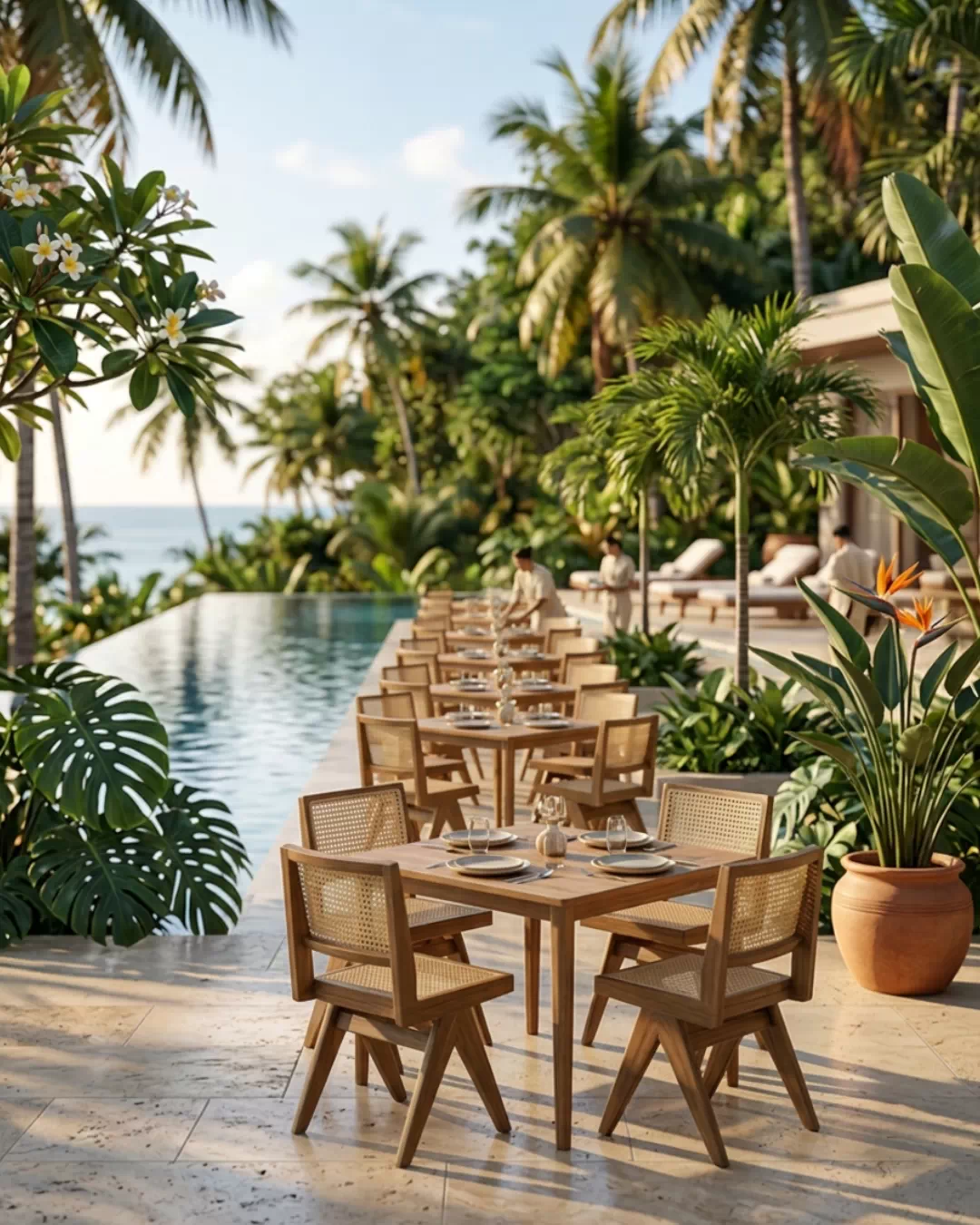
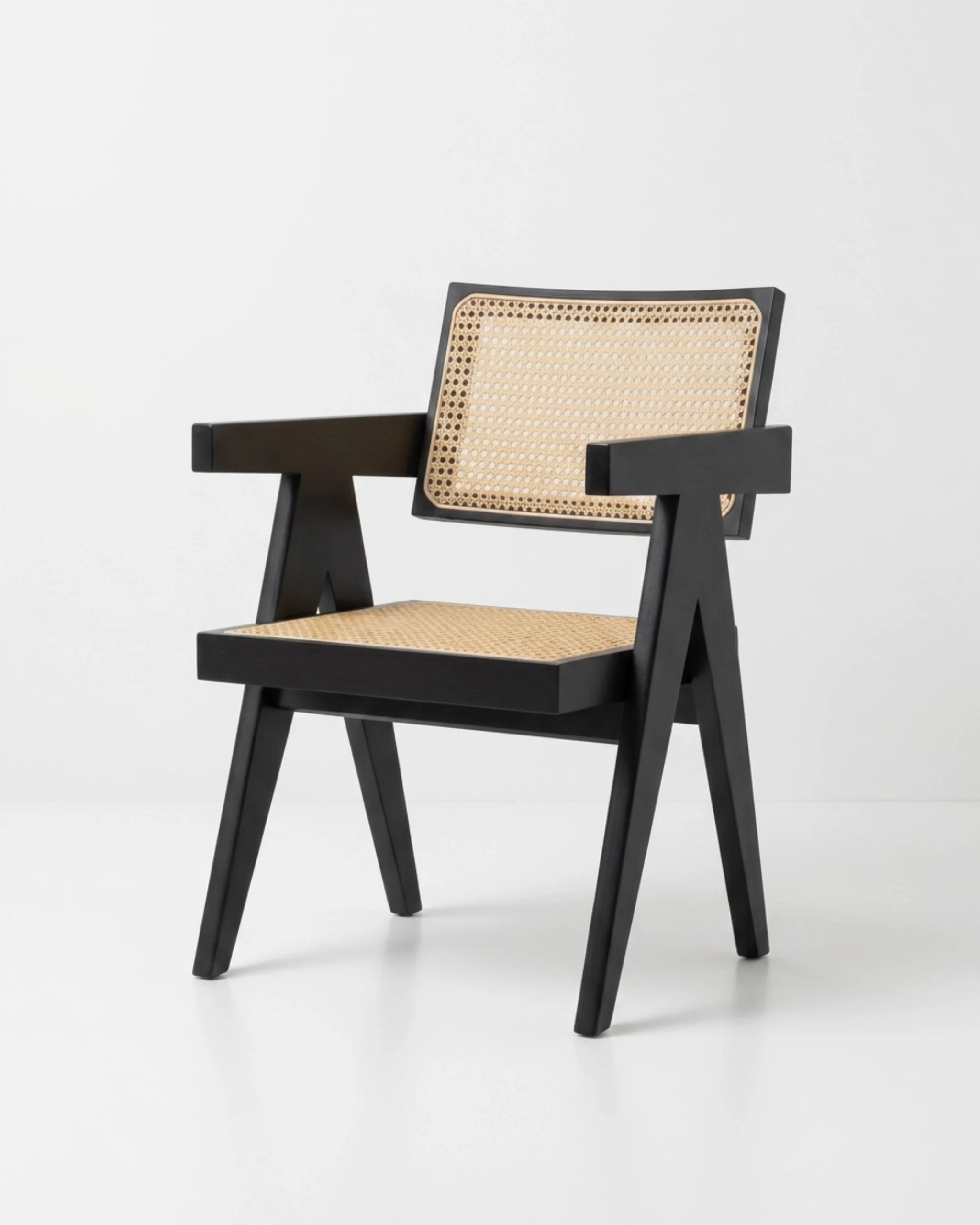
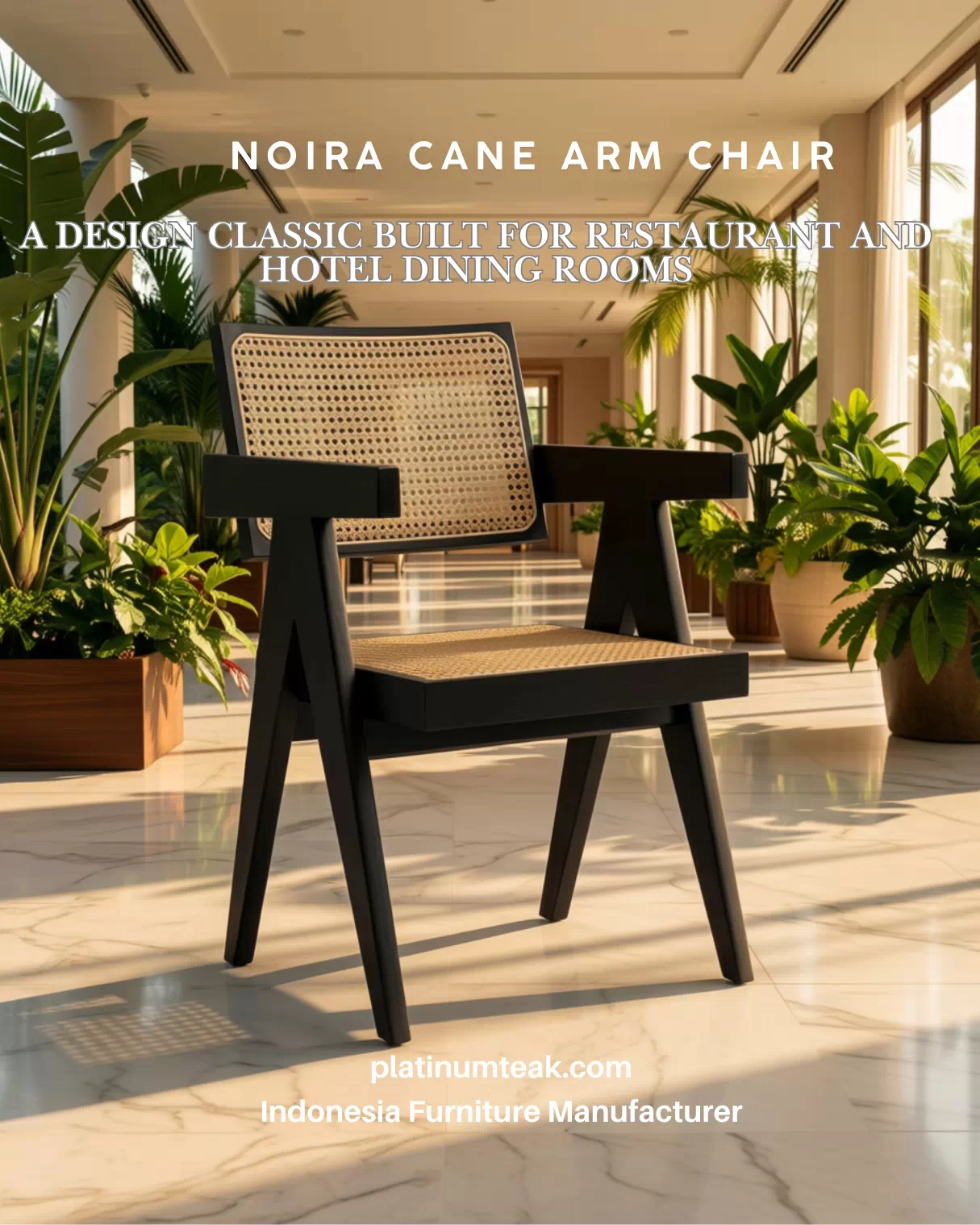
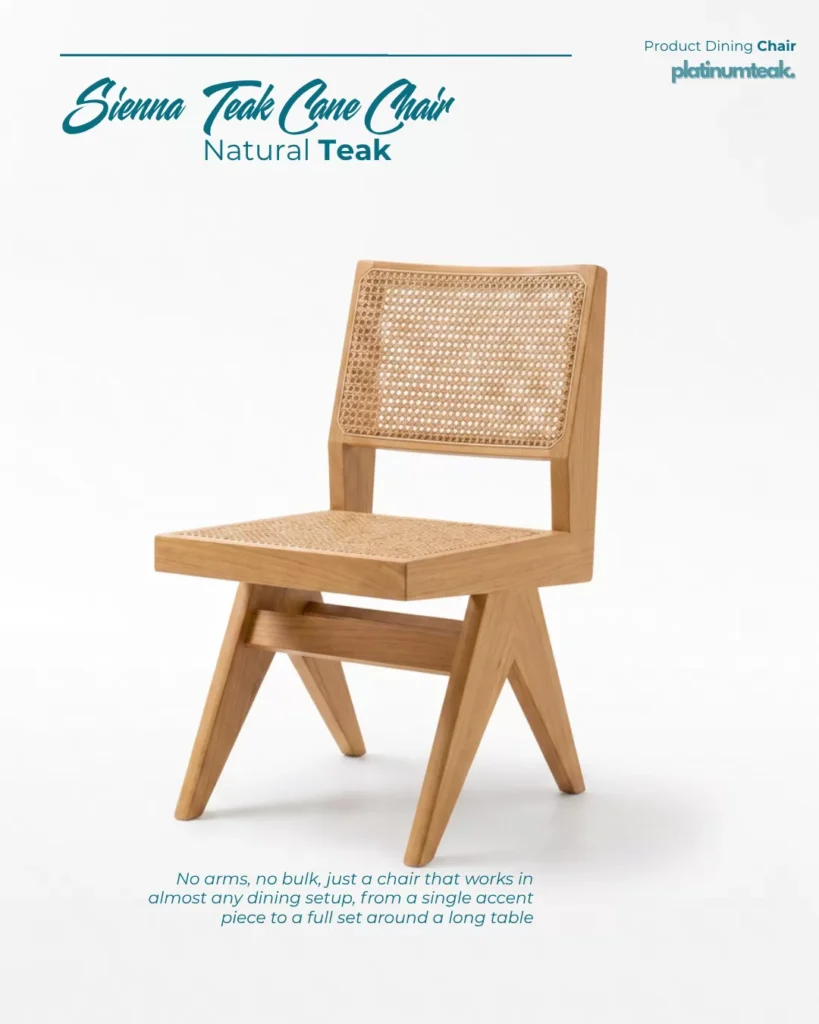
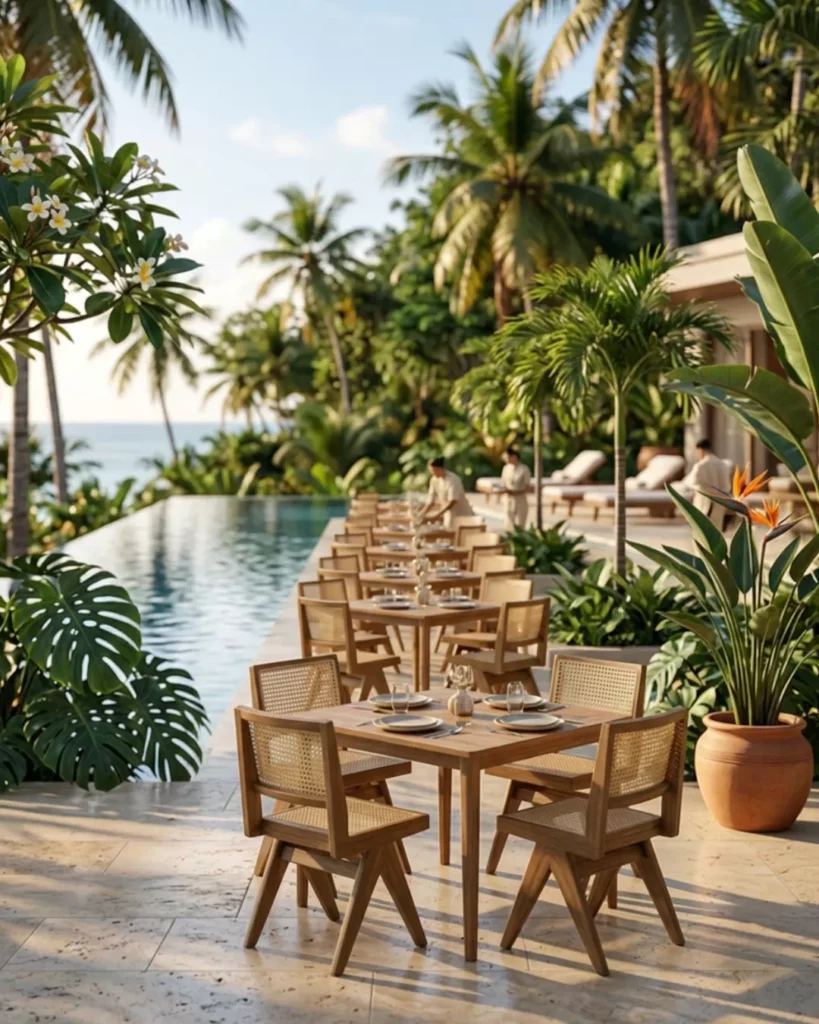
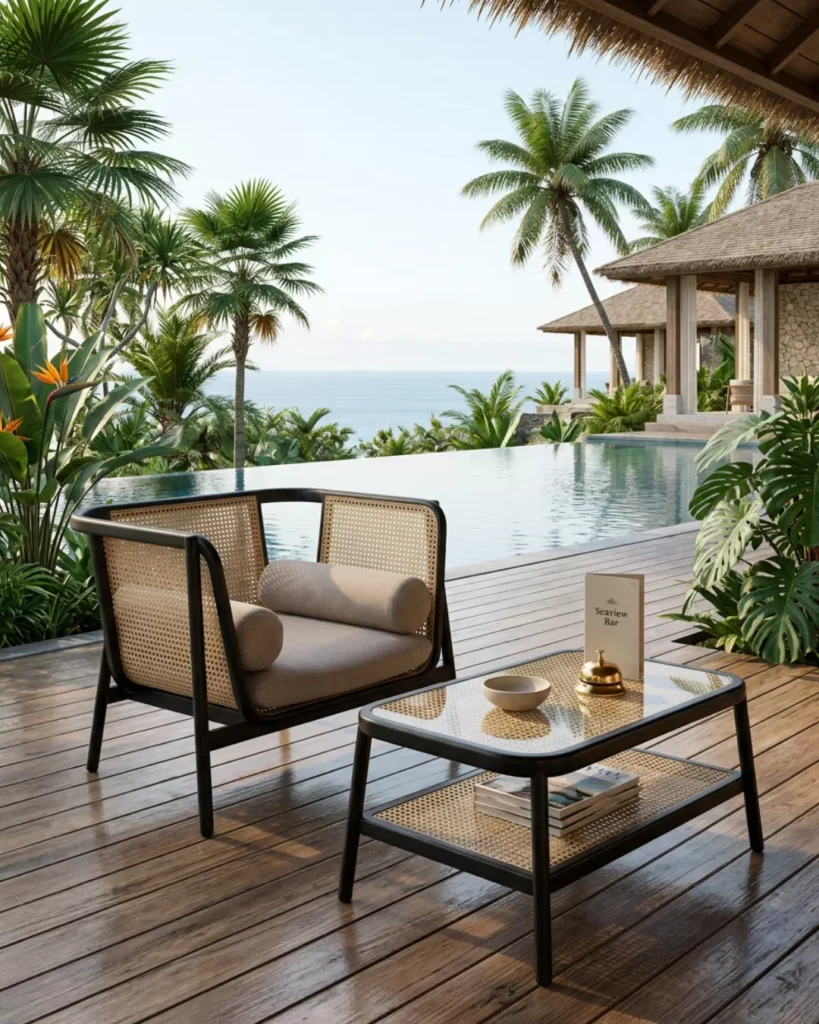
Many of our pieces also incorporate hand-woven natural cane or rattan, a separate craft entirely from wood joinery. A properly tensioned cane panel, woven by an experienced artisan, holds its shape for years and can be re-woven when it eventually shows wear, extending the usable life of the piece well beyond what a printed or molded imitation allows.
A Full Range Built Across Indoor and Outdoor Categories
An established Indonesia furniture manufacturer typically covers far more than a single product type, and our catalog reflects that range across two primary collections.
Outdoor Furniture
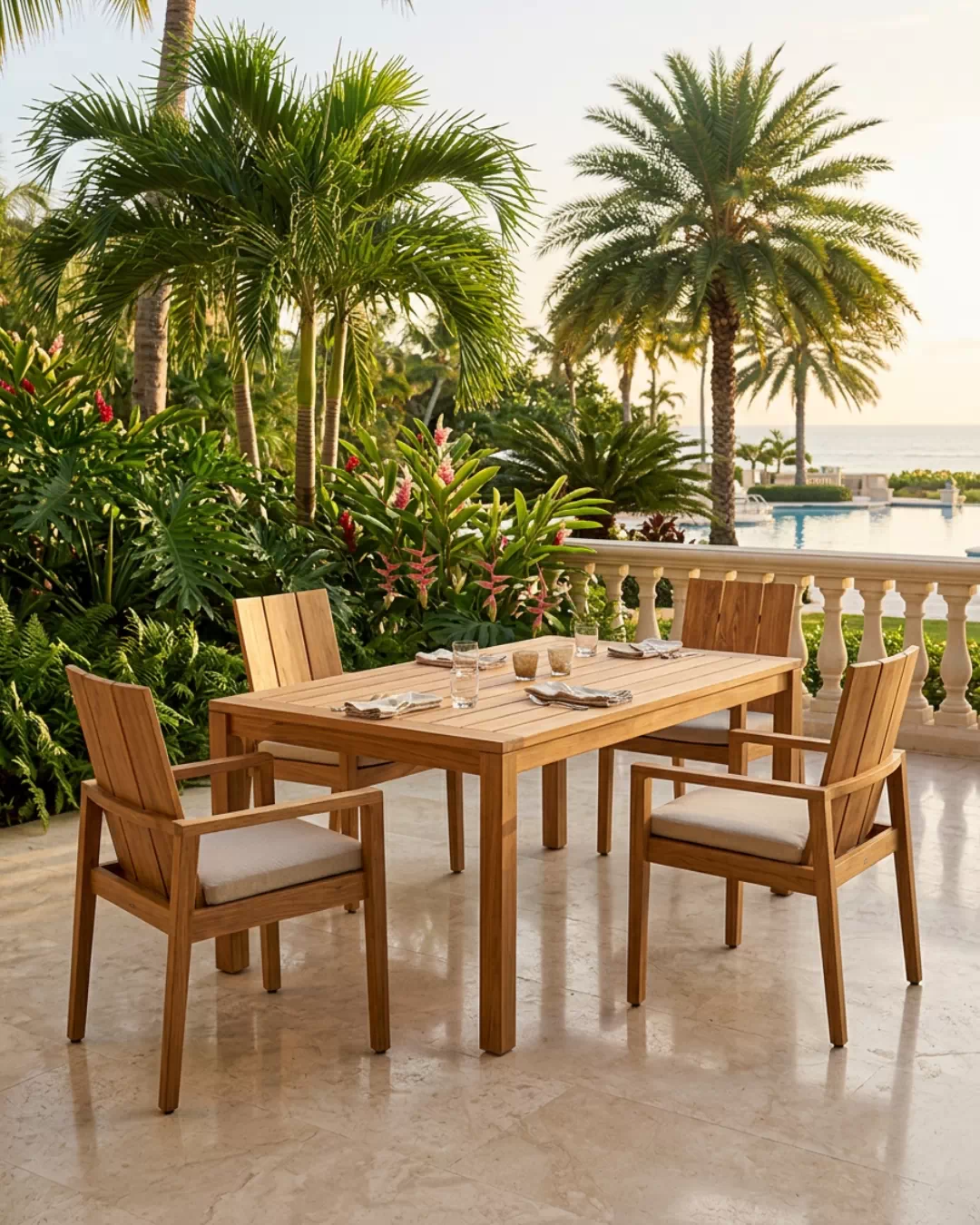
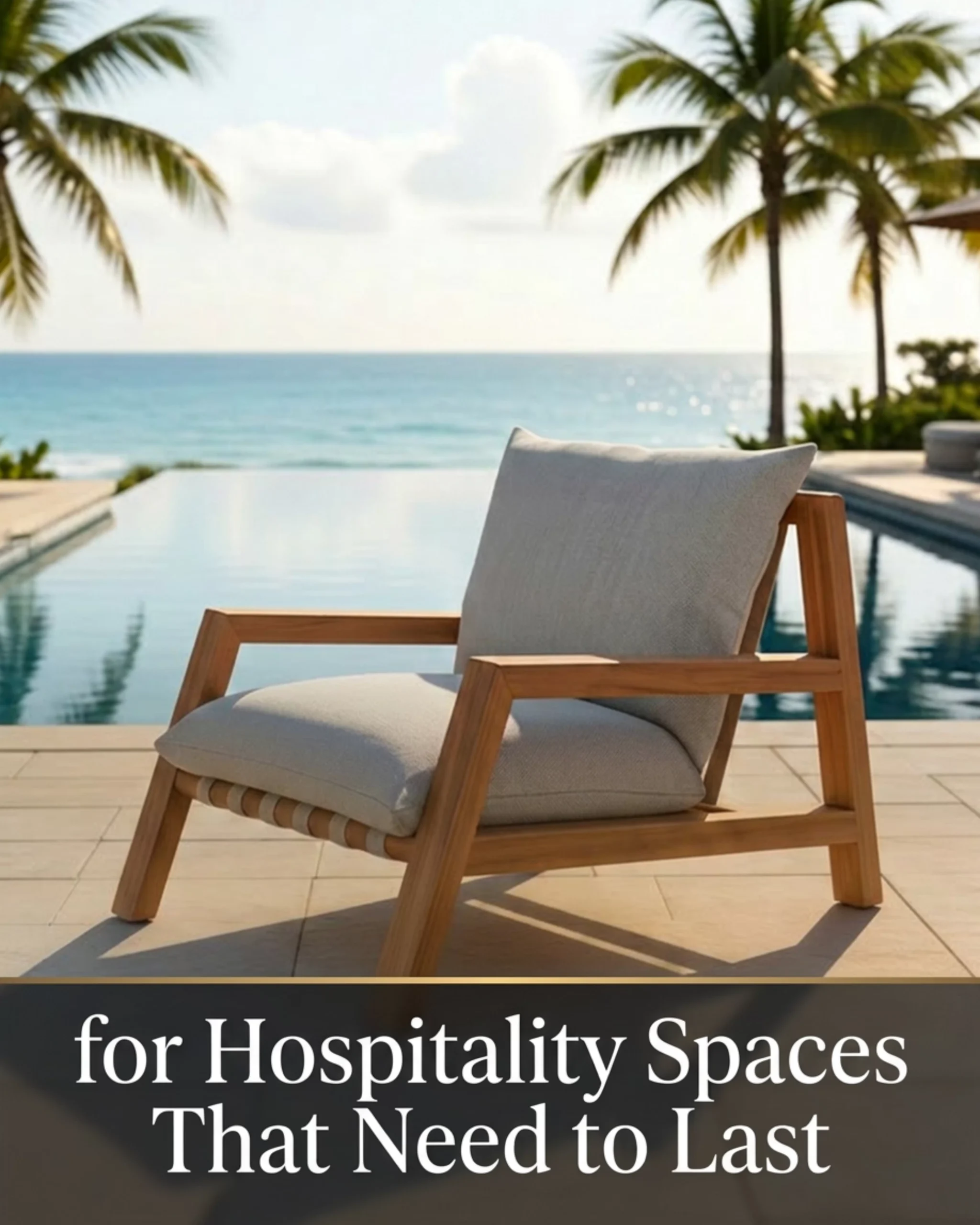
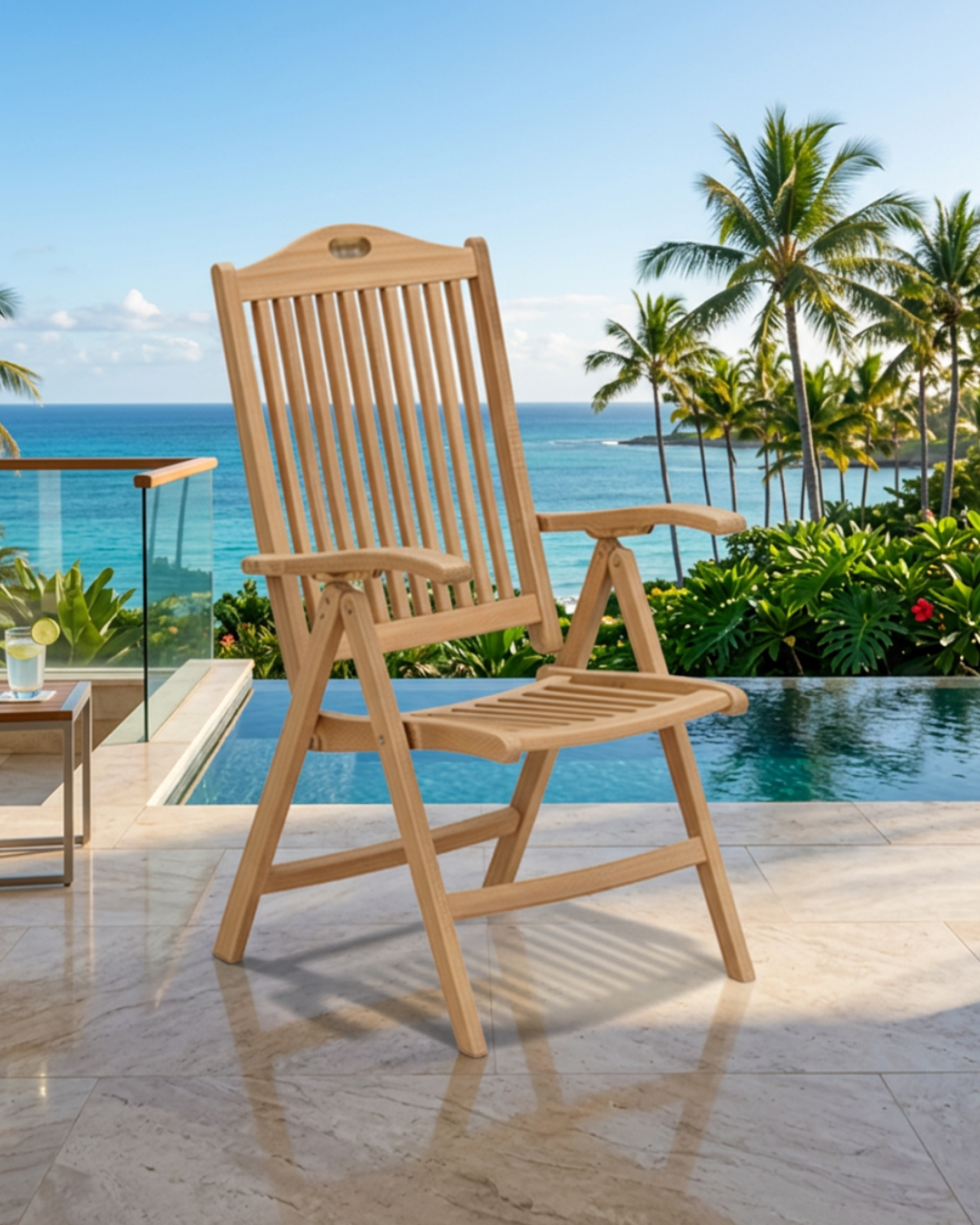
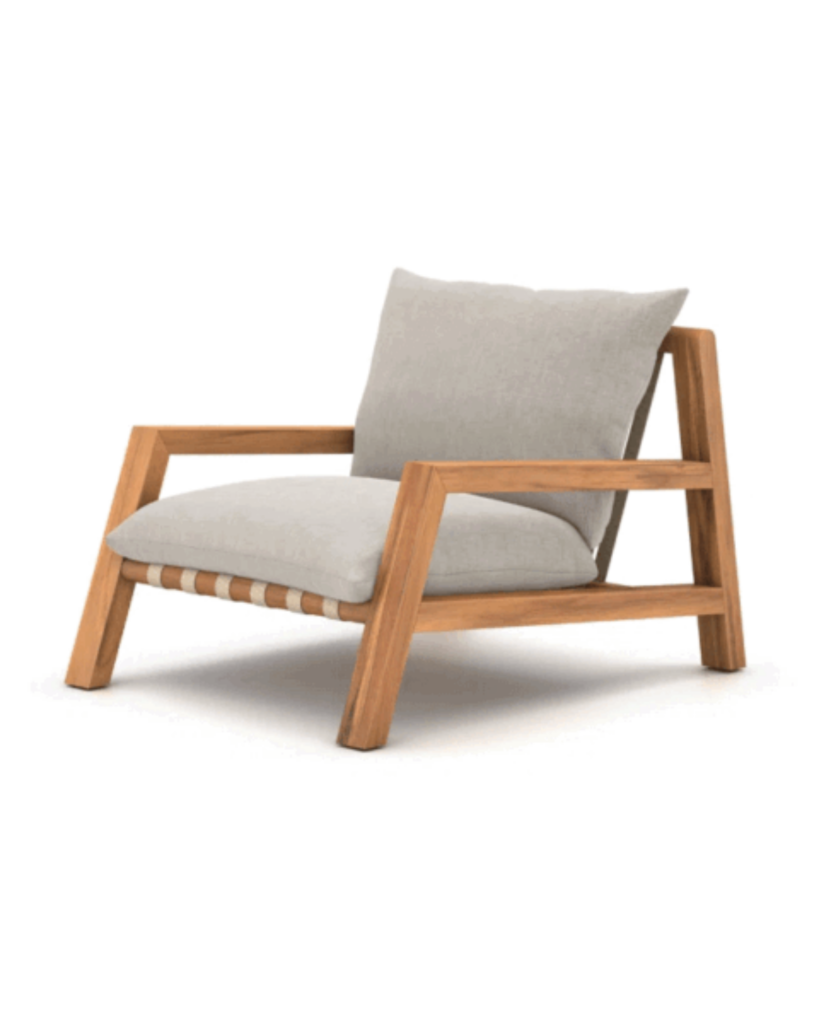
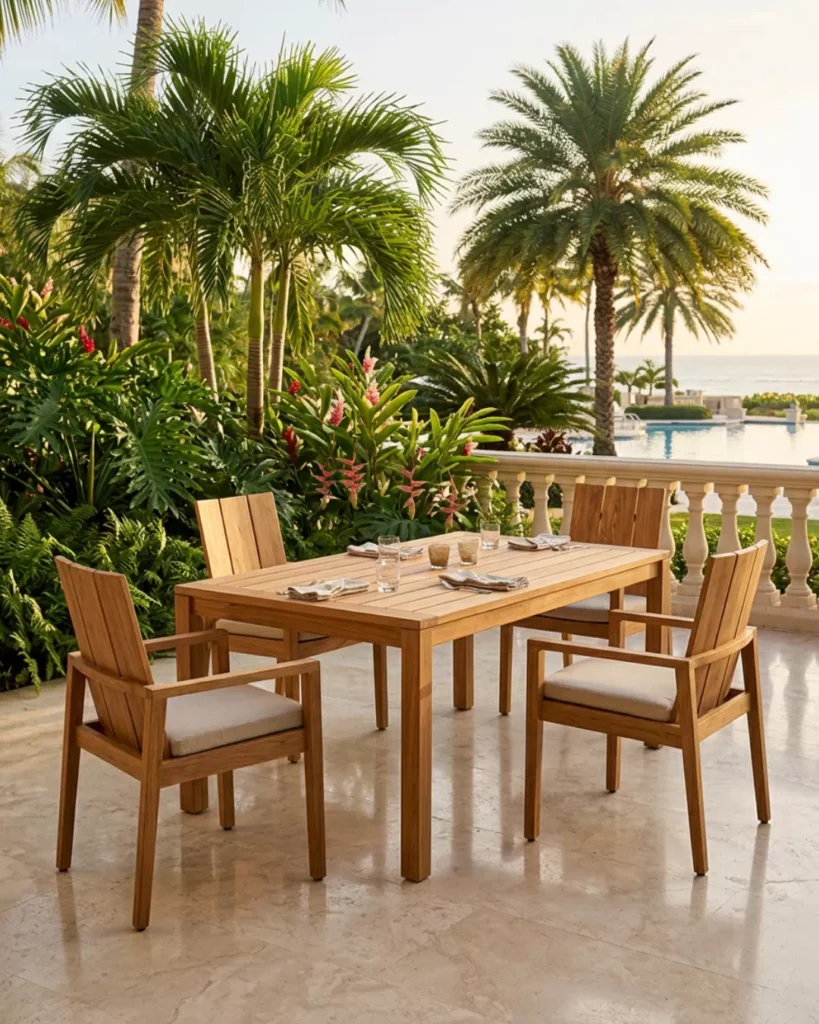
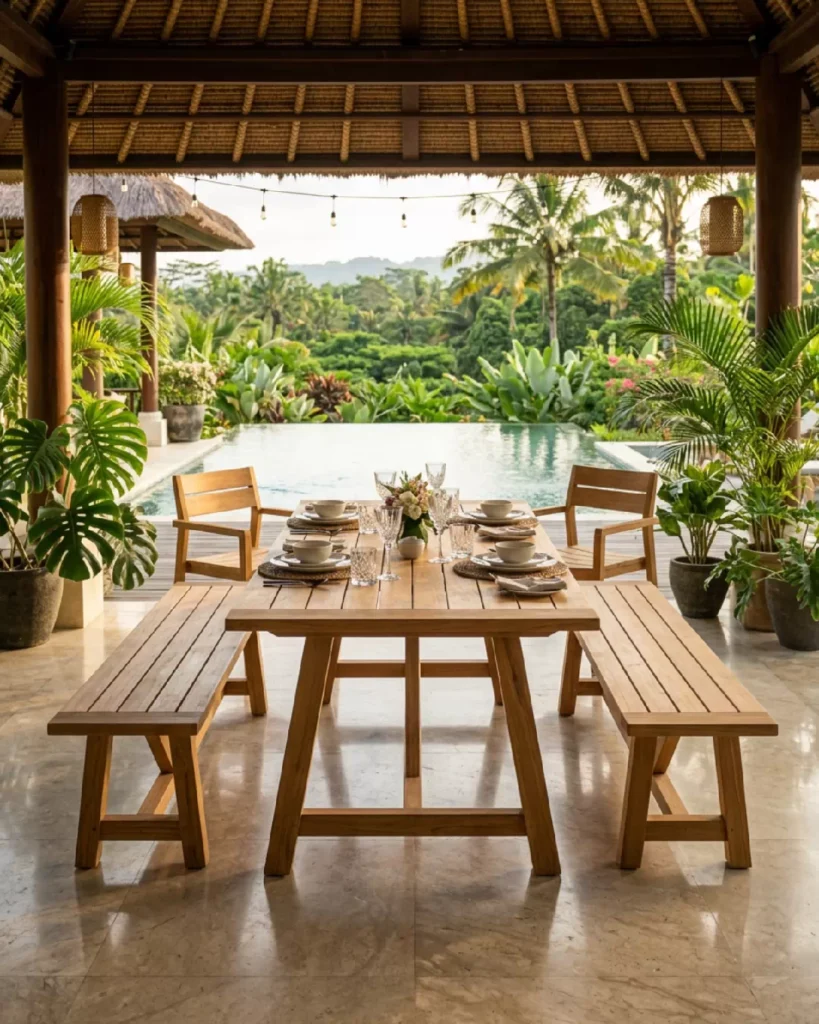
Our outdoor furniture collection covers pieces built specifically to handle sun, rain, and daily hospitality use, including outdoor benches and outdoor sofas designed for pool decks, resort terraces, and garden settings. These pieces rely on solid teak construction rather than painted softwood, since the finish itself needs to withstand direct weather exposure without peeling or cracking.
Indoor Furniture
The indoor furniture collection spans bedroom, living, and dining pieces built for interiors rather than weather exposure, including beds, wardrobes, and TV stands. These pieces can use a wider range of finishes and materials, including hand-woven cane accents that aren’t suited to uncovered outdoor exposure.
Seating: The Category Most Buyers Start With
Seating tends to be the first category most wholesale buyers explore, since chairs are ordered in higher volume than almost any other furniture type for hospitality and dining projects. Our chairs collection includes a range of dining chairs, spanning solid teak frames, hand-woven cane backs and seats, and cushioned options depending on the level of comfort a project requires.
We also produce stools and bar stools, both frequently ordered alongside dining sets for hospitality projects that need flexible, space-efficient seating for bar counters, kitchen islands, or casual dining areas.
Tables: Built to Match Any Dining or Lounge Setup
Our tables collection is one of the most detailed categories in the catalog, covering dining tables, coffee tables, console tables, side tables, bedside tables, dressing tables, and study desks. This range reflects how differently tables get specified depending on the space, a resort dining room and a boutique hotel guest room call for entirely different proportions, finishes, and weight.
Storage and Living Room Pieces
Beyond seating and tables, a full-service Indonesia furniture manufacturer needs to cover storage and living room furniture as well. Our catalog includes sofas, benches, racks, and kitchen sets, alongside a broader catch-all category for pieces that don’t fit neatly into a single classification but still meet the same construction standards as the rest of the range.
Custom Production and Private Label Manufacturing
One of the more overlooked services a genuine manufacturer can offer is custom and private label production, and it’s often the deciding factor for larger hospitality buyers. Through our Custom & Projects service, we adapt dimensions, finishes, and materials to match an existing property design, and we produce fully white-labeled furniture ready for a client’s own branding and packaging.
This matters for two very different kinds of buyers. Hotel and resort groups often need furniture that matches a specific design language across multiple properties, which means working from architectural drawings rather than a standard catalog listing. Furniture retailers and distributors, on the other hand, often want products manufactured with no visible connection to the original factory, so they can sell under their own brand without customers tracing the product back to a third-party manufacturer.
How the Wholesale Ordering Process Actually Works
For buyers new to sourcing furniture from Indonesia, the process is worth understanding upfront rather than learning through trial and error on a large order. It typically starts with browsing the full product catalog and identifying pieces or categories relevant to a project. From there, most serious buyers request a single sample unit before committing to volume, since photos and spec sheets can only communicate so much about build quality, weight, and finish consistency.
Once a sample is approved, orders move into production planning, where lead times depend heavily on order size, current factory capacity, and whether any custom specifications are involved. Buyers with questions about minimum order quantities, shipping terms, or payment structure can usually find preliminary answers on our FAQ page, though every project is different enough that direct communication with our team is the more reliable path for anything beyond a standard catalog order.
Common Mistakes Buyers Make When Sourcing from Indonesia
A few patterns show up repeatedly among first-time buyers, and most of them are avoidable with the right questions asked early. The first is assuming photos represent guaranteed consistency across a full production run, when natural wood and hand-woven materials always carry some variation batch to batch. The second is underestimating lead times for custom or large-volume orders, since production capacity and material sourcing can extend timelines well beyond what a single sample chair might suggest.
A third common mistake is skipping the sample stage entirely to save time, which often costs more in the long run if an issue only becomes apparent after two hundred units have already shipped. And a fourth is not confirming timber legality documentation upfront, particularly for buyers importing into markets with strict regulations around wood sourcing, where missing paperwork can delay or block a shipment entirely.
Questions Worth Asking Any Indonesia Furniture Manufacturer
Before committing to a supplier, a short list of direct questions tends to reveal more than a catalog ever will. Ask whether the company operates its own production facility or subcontracts to third-party workshops. Ask about SVLK or equivalent timber legality certification, particularly if importing into a market with strict wood sourcing regulations. Ask about realistic lead times for your specific order size, not just the timeline quoted for a single sample. And ask directly about their process for handling quality issues or damaged shipments, since how a supplier answers that question often says more about their reliability than anything else in the conversation.
Why Buyers Work With Platinum Teak
We built our production process around the assumption that most of our buyers are sourcing at volume for hospitality, retail, or private label projects, not furnishing a single home. That means our workshop in Jepara is set up for consistency across large orders, our team is accustomed to working from architectural specifications rather than just catalog selections, and our documentation process supports buyers who need clear legality paperwork for import.
You can learn more about our background and production process on our About Us page, or browse ongoing updates and project stories on our blog.
Sustainability Practices Worth Understanding
Sustainability in teak sourcing isn’t a single certification, it’s a chain of decisions starting from how the plantation is managed through how the wood is processed. Government-managed plantations in Java operate on long rotation cycles, often twenty years or more, with replanting requirements built into the harvesting system. That’s different from unregulated logging, where trees are cut without a corresponding replanting commitment, gradually depleting the resource rather than maintaining it.
For a buyer, the practical takeaway is that sustainability claims are worth verifying rather than taking at face value. A manufacturer that can point to specific certification, like SVLK legality verification, and explain their plantation sourcing in concrete terms is generally more trustworthy than one that uses sustainability language without backing it up with documentation. This matters increasingly for buyers in markets with import regulations around timber sourcing, where vague claims can create real compliance problems down the line.
Shipping and Logistics: What Wholesale Buyers Should Expect
Sourcing furniture internationally means shipping logistics become part of the actual cost and timeline of a project, not an afterthought handled after production finishes. Furniture that ships flat-packed or with minimal assembly required fits more units per container than fully assembled pieces, which directly affects per-unit freight cost on a large order. This is worth discussing with any Indonesia furniture manufacturer early in the sourcing process, since container efficiency can meaningfully change the total landed cost of an order.
Most shipments from Indonesia move through major ports like Semarang or Jakarta, with transit times varying significantly depending on destination. Buyers importing into the US, Europe, Australia, or the Middle East should expect ocean freight timelines measured in weeks, not days, and should factor that into project planning well before a property’s opening date. A reliable manufacturer will give a realistic combined estimate covering both production and shipping time, rather than quoting only the production timeline and leaving shipping as a separate, unaddressed variable.
Evaluating a Sample Before Committing to Volume
Requesting a sample unit is standard practice, but knowing what to actually check once it arrives is what separates a useful sample evaluation from a formality. Start with the joinery, look closely at corners and load-bearing joints for gaps or visible glue, since a properly cut mortise and tenon joint should sit flush without needing filler to hide an imprecise fit. Check the wood grain and finish consistency, keeping in mind that natural variation is expected, but the overall tone and grain pattern should feel cohesive rather than mismatched.
If the piece includes hand-woven cane or rattan, press gently on the woven panel to check tension, a properly woven panel should feel taut without excessive give. Sit in the piece if it’s seating, and pay attention to how it feels after several minutes, not just on first contact. Finally, check the packaging itself if possible, since how a sample is packed often previews how a full container order will be protected during a much longer shipping journey.
After-Sales Support and Long-Term Partnerships
Sourcing furniture for a hospitality or retail project is rarely a single transaction, most successful relationships with an Indonesia furniture manufacturer extend across multiple orders as a property expands or a retail catalog grows. That makes after-sales support worth evaluating alongside the initial order itself. Ask how a manufacturer handles damaged shipments, whether replacement parts are available for pieces with removable cushions or hardware, and how design adjustments are handled if a second order needs slight modifications from the first.
We treat every order, from a single sample chair to a full container shipment, as the start of an ongoing relationship rather than a one-time sale. That approach shapes how we communicate through production, how we document specifications for repeat orders, and how we handle any issues that come up after a shipment arrives.
Understanding Teak Quality Without Relying on Marketing Labels
Buyers researching an Indonesia furniture manufacturer will often see wood quality described with various marketing labels, but these terms aren’t standardized across the industry the way something like SVLK certification is. Rather than relying on a label alone, it’s more useful to ask specific questions: whether the wood is heartwood or includes sapwood, whether it’s kiln-dried or air-dried, and what moisture content the wood was processed at before joinery.
Heartwood, the denser inner portion of the tree, holds the natural oils responsible for teak’s weather resistance, while sapwood, the outer layer, is more porous and less durable outdoors. Furniture built primarily from heartwood tends to perform better over years of outdoor use, though it also costs more to produce since less of each log is usable. Kiln drying reduces wood moisture content in a controlled environment, which helps prevent warping and cracking after the furniture is assembled, particularly important for pieces that will be shipped through varying humidity levels during international freight.
A transparent manufacturer should be able to answer these questions directly rather than deflecting to a generic quality label. That transparency is often a better indicator of reliability than any single certification or grading term on its own.
Frequently Asked Questions
What’s the minimum order quantity for wholesale orders?
Minimum order quantities vary by product, but most of our catalog pieces are available starting around twenty units for wholesale pricing. Custom and private label projects are typically discussed on a per-project basis depending on scope.
Can furniture be customized to match an existing property design?
Yes, through our Custom & Projects service we regularly adapt dimensions, finishes, and materials to match architectural drawings or existing design languages across hospitality properties.
Is the teak used in production legally certified?
Our teak is sourced from managed, legally verified plantations, and documentation is available for buyers who need it for import compliance.
How long does production typically take?
Lead times depend on order size and whether custom specifications are involved. We provide realistic timelines upfront rather than optimistic estimates meant to close a sale, and we’re happy to discuss your specific project timeline directly.
Do you ship internationally, and how is freight typically handled?
Yes, we regularly ship to hospitality and retail buyers across the US, Europe, Australia, the Middle East, and Asia. Most orders move via ocean freight through major Indonesian ports, and we help buyers understand realistic combined production and shipping timelines before committing to an order.
What happens if a piece arrives damaged?
We work with buyers directly to resolve shipping damage, whether that means replacement parts or a broader discussion depending on the scale of the issue. This is a fair question to ask any Indonesia furniture manufacturer before ordering, since how a supplier answers it says a lot about how they’ll handle problems after the sale.
Ready to Source Furniture From an Established Indonesia Furniture Manufacturer?
Whether you’re furnishing a single boutique property or sourcing a full container for wholesale distribution, working with a manufacturer that controls its own production, from raw teak through final joinery, tends to produce more consistent, more reliable results than working through a reseller.
Browse our full product catalog, explore our chairs and tables collections, or contact our team directly to discuss a sample order or custom project.